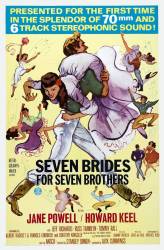
Question: When they are singing under a tree full of doves, it looks like they were tied to the tree branches. Is this true?
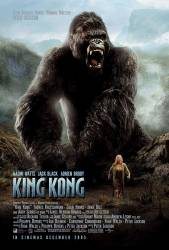
Question: What happens to the Natives? After the first contact with Denham & Co and the sacrifice of Ann they make no further contact with the group, even when the group are inside their village at various points after this.
Answer: They scared them off with their guns. In the scene where they capture Ann to sacrifice her to Kong, Denham and his men come to rescue her and when they start shooting the natives hide. It's never fully explained but the most likely answer is that they are too scared and have even moved villages or are just hiding really well.

Question: I am officially confused. Corrections on this site by a few people state it is all just a dream. However at the end of the movie, Sandler finds the remote at home with a note from Morty. So is it a dream or not? If so, then what is the deal with the remote at the end of the movie?
Chosen answer: It was not a dream - Adam Sandler just thought it was. Morty left the remote at Michael's house as a way of letting him know that he has been given a second chance.
Remember, Morty was the Angel of Death. He gave Michael the remote (control) of his life once to do things his way and allowed him to get his earthly material desires. He became CEO of the company but sacrificed all the valuable time he could've spent with his family. At the end, the remote appears to him again. This time it's significance is "temptation" he's being given the chance to take control of things again in real life. Not just in his dream. He knows now the repercussions of wanting the.
... back into our physical body. Remember that God is always in control. Don't take the remote away from him to try to do things your way or you won't like what you find at the end of the Rainbow (Death and regret). What Morty was telling Michael in one scene about the lucky charms metaphor.
I believe it was a dream because he comes home and everything is back to normal the kids are still young his dad is living the dog Sundance is still living and his wife isn't with bill the guy that teaches Ben how to swim. He was living in a different kind of reality.
Sorry I typed to fast I meant it was a dream.
Answer: Of course it's all a dream. He falls asleep on the bed at Bed, Bath and Beyond. At the end, he wakes up from the dream on the same bed. The remote and note from Morty at the end is supposed to be the "mystery" of the movie since he learned his lesson throughout the dream and gets a second chance to live normal. Speeding through the tough parts of life is not really a "dream come true" life since you'll miss everything life has to offer.
This same "mystery" theory of whether or not it was a dream also occurred in the old Bugs Bunny cartoon with the evil scientist and red monster. Bugs woke up from a "dream" only to see the monster from the dream talking to him. It definitely plays with your mind.
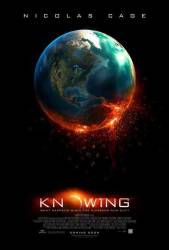
Question: Why, near the end of the film, does Caleb start writing numbers which are supposed to be predictions of future events, when the world is going to end?
Answer: Great question. Probably writing predictions for the "new" world.
So did someone decode the list? Just for s* and giggles :).
Answer: I think Caleb started writing the numbers so he could tell his father the coordinates of the location he needed to take the children in a last ditch effort, since the girl whom originally wrote the numbers didn't complete them. He un-"knowing"-ly made the same mistake and interrupted him again.

Question: I'm confused about the ending. When talking to the journalist, the journalist looks to his right and he sees a young Nemo running to the train. Eventually, Nemo chooses to be with neither of his parents. Did Nemo's extremely long life actually happen or, was he actually still a child deciding what to do at that point and he only imagined possible futures?
Answer: This film is mostly open up for interpretation but I understand it that young Nemo thought up older Nemo and it actually happened, maybe in an alternate universe. Don't forget that Nemo could remember the future so most of what he imagines is probably going to happen. Unfortunately he can't predict choice so he doesn't know which life happens so all of them happen at once and they don't happen as well because he chose to make no choice (Zugzwang). Hope that explained it.

Question: What happened to Mike the Mouse? At the end of the film we see him escaping with his girlfriend, but the bear is latching on the car. This is the last time we see them and we don't see them at the reopening of the theatre, so what happened?
Answer: I think he escaped from the bear with his girlfriend, sped off very fast and the bears fell off the car.
You haven't read the question. Before it cuts to Meena's performance, the lead bear popped up from behind the car and presumably kidnapped them.
Answer: Mike had to stay with the bears for the rest of his life.
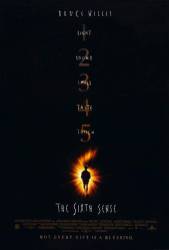
Question: Through most of the film Malcolm is dead. All the other ghosts still have scars from how they died but why doesn't Malcolm have his mark which should be a bullet wound?
Answer: Because as Cole tells us in the middle of the movie, "They only see what they want to see." The movie shows us Malcolm as he perceives himself. He can't actually put on an overcoat, or change clothes. He sees what he expects to see. He goes outside in the cold to visit Cole, so he sees himself wearing an overcoat. He doesn't know he is dead - he doesn't see his wound. To preserve this misdirection throughout the movie, we are shown Malcolm as he sees himself.
Actually, we do see Malcolm and Cole sees him. The entry wound in his abdomen is tiny, and the large, obvious exit wound is on Malcolm's back, which we never see.
Question: Why did the Warden slap Mr. Sir in the face with her rattle snake venom?
Question: Does Kiera Nightly's character ever split up with her husband and go to his best friend? They show her with the husband at the end of the movie, but it seemed to me that she really loved the best friend. I was sure she would choose him over her husband.
Answer: No, Keira Knightley's character is not in love with the best friend; her kiss is one of compassion and affection, not love. Richard Curtis mentions this on the DVD commentary - he says something about Juliet being the sort of girl who would be used to men falling for her and treating them gently and kindly, which is what she does here.
Question: I'm not sure if I was seeing things but during the fight between Hancock and Mary, when it goes all windy and stormy, at one point it cuts to some people who are screaming and running away. I thought I saw a figure that appears to be made out of rocks or similar material and about 10 foot tall, it wasn't our hero or heroine as they were not in that scene so what on earth was it?
Answer: I saw it, too, and wondered. He's a street performer in L.A. that just happened to be around during filming. See: http://io9.com/5023487/hancock-giant-robot-mystery-++-solved.

Question: What was the math problem on the blackboard behind Julia Roberts? I think the answer is wrong as x and y equals 3.
Answer: Yes, the solution given is wrong, it should be (x=-4, y=4). Glad I'm not the only one noticing that. Actually that's how I found this page :)
Answer: August says she's terrible at fractions, may be maths is not her strong point.
Question: Why did everybody in the courtroom go silent when Tom said that he did chores for Mayella because he felt sorry for her?
Answer: At that time in history, Tom, a black man, was considered inferior to Mayella, a white woman. When he says he "felt sorry" for her, it is interpreted as him thinking he is above her or better off in some way. Regardless of his good intentions, for him to think of himself as being in a superior position to help her was considered unacceptable because it was seen as a black person rising above their lower place in society.
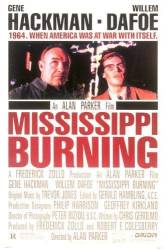
Question: Who was the man who hung himself in the end?
Answer: The Mayor (played by R Lee Ermey) who had been told the story of Homer Wilkes and threatened with castration earlier on.
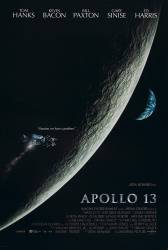
Question: When Aquarius is descending during re-entry, why is the Navy preparing Search & Rescue instead of the Coast Guard?
Chosen answer: Aquarius was most likely going to splashdown in international waters; since the U.S. Coast Guard only has jurisdiction within American waters, the Navy would have to rescue them.
Answer: Because the Navy was assigned the Search, Rescue and Recovery task for all of NASA's space program. Imagine how long it would take the Coast Guard to get to the other side of the world.
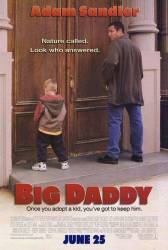
Question: Which twin is playing the part of Julian when he is getting taken away from Sonny?
Answer: Cole.
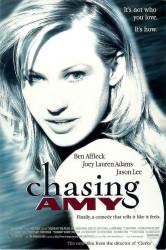
Question: I've noticed that throughout the movie, the first two fingers on many character's right hand are orange. Most noticeable when Holden sees Banky at the end and in the lesbian bar when Banky is swapping stories with Alyssa. What's the significance of this?
Answer: I'm gonna be totally honest... I'm 99% sure there's no significance. In fact, I think it's just stained skin from all the smoking people do in the movie. Most people hold their cigarettes between their first two fingers. And most of the characters are depicted smoking throughout the film, which means they had to smoke a LOT during filming to maintain continuity. I used to get occasional orange (and sometimes yellow or light brown) stains on my fingers and hands when I smoked cigarettes. Especially if I smoked more than one in a short period of time and didn't wash me hands between them. So it's probably just smoking stains on the actor's fingers. In fact, I looked, and you see Banky holding a lit cigarette in his right hand and smoking during the story swapping scene you mentioned, with gives some direct evidence to my theory. (For reference, those stains can wash off with some good scrubbing).
Question: What song is playing as Christine is crushing Darnell against the steering wheel?
Answer: "I've Got A Girl Named Boney Maroney" by Larry Williams.
Question: Who is Conrad? Harry Conick, Jr.'s character writes him a letter at the end, and there is a Conrad character listed in the credits, but I haven't been able to find him.
Answer: I thought that it was Peter Kurten (Foley) that broke in and left the book. However if it was Conrad, then he does not appear in the flesh in the film.
You are correct. I just rewatched this tonight on Tubi.
Answer: Conrad is the man that breaks into Helen's flat and leaves the book. Happens just over 1 hour into the film.
Answer: I don't think Conrad appears in the film. Earlier in the movie HC Jr says he has other "disciples"; Conrad seems to be the new recruit to replace the just-killed McNamara character.
Question: Isn't it common knowledge that Nicole found Tom's mask and put it on his pillow? I always wondered why Tom freaked out so much when he finds it. Is he afraid that Nicole knows where the mask is used? Or that someone else placed it there? And unless I missed something, how come this was never discussed between the two? You'd think Nicole would be asking why he left this in his safe?
Chosen answer: I think someone from the freaky orgy broke in and put the mask on the pillow to warn Cruise's character to keep his mouth shut. That's why Cruise's character is so upset-they got into his home and his safe.
I always assumed that she was a member of the orgy party. She was letting him know that she was there.
No, she wasn't.
Answer: Yes it is true. They did this to prevent the birds from flying into the backdrops and becoming injured or killed.