Question: How does he fold the Monet in half to fit into the briefcase? Originally I thought he'd separated it from the wooden frame (ie. just a canvas), but when he takes it out back at his house he holds it up, and the wooden frame's still in one piece. Also, surely folding it in half would crack the paint, but despite the painting being twice the width of the briefcase (it fits snugly when the case is open), he then shuts the case down to a "normal" size. Any ideas?
Answer: The only explanation I can come up with is that the inner part of the frame is precut. With the frame cut that way it would allow the picture to fold, but when unfolded it would be fairly rigid with the exception of bending it forward at that point. When he pulls the painting out, it still holds the square shape of the frame. Best I can come up with.
Answer: He doesn't fold it. The frame is solid. It's just movie editing to make the viewer think he put it in her briefcase. You can't fold a Monet.
He absolutely folds it. We see him put it in the case and him then shut the case, folding it in half.
Question: What does old Tom Hanks drop out of his pocket when he walked out of the door of the old folks home?
Answer: Paul seemed to take the windbreaker in a random fashion. I'm not sure if it even belonged to him. I've no idea what it was but I agree. Not a piece of toast.
Answer: A piece of toast.
I've tried and tried to see what it actually was. It couldn't have been toast. This object hit the floor hard and rolled out of camera range, quickly. I thought maybe door knob or thread spool. Possibly a thread spool because of Mr. Jingles. Door latch was intact.

Question: Can anyone translate what Adam and his dad are saying when Adam is a teenager and they are in the classroom?
Answer: Adam: Tempus fugit (Latin) = Time flies. Dad: Que les bons temps roulent! (French) = How good times roll! Adam: Geradeaus, dann links (German) = Straightforward, then left. Dad: Sorgen Sie bitte dafür, dass die [das] Gepäck sorgfältig behandelt werden [wird] (German) = Please make sure that this luggage will be treated carefully. Adam: Haben Sie etwas Nettes in Leder? (German) = Do you have something nice in leather?
Answer: Haben Sie etwas in diesem, Lehrer? Do you have something (of yours) inside it (my luggage), teacher? Kind of. Why (else) are you concerned about my luggage? This too makes some sense (of humour, sarcasm, or something...) Maybe. I don't know.
Thank you for this post. Being fluent in German, this dialogue always baffled me. Maybe it wasn't supposed to be clear, just some semi-gibberish posing as German. My dad always asked me what that meant, and I could never understand the meaning of the second sentence. Truth be told, I really don't like when they make it seem clear and laugh about it, whereas the viewers are none the wiser and feel dumb.
I have always been confused by that last line, too. I thought maybe it was because I’m an American and a non-native German speaker. I’m glad it wasn’t just me.
Question: Was Guy in on the cruel revenge prank to put dog food on Aldys, or did he just want to dance with her, and didn't know anything about it?
Answer: Over the course of the evening, Guy learns that being popular isn't the most important thing in the world and wanted to make peace with Aldys. I think he was genuinely being a nice guy and wasn't in on the prank.
Question: Maybe I missed a major plot point, but why exactly does Tom kill his lover at the very end?
Chosen answer: Tom and his lover, Peter, are travelling on a boat. Meredith, who knows Tom as Dickie, is also on the boat. If they were to meet her while together, Tom's false identity would have been revealed. Peter would have been able to figure out that Tom actually murdered Dickie.
Answer: He had to kill him. Tom couldn't kill Meredith because she wasn't travelling alone, and Peter was.
Question: Through most of the film Malcolm is dead. All the other ghosts still have scars from how they died but why doesn't Malcolm have his mark which should be a bullet wound?
Answer: Because as Cole tells us in the middle of the movie, "They only see what they want to see." The movie shows us Malcolm as he perceives himself. He can't actually put on an overcoat, or change clothes. He sees what he expects to see. He goes outside in the cold to visit Cole, so he sees himself wearing an overcoat. He doesn't know he is dead - he doesn't see his wound. To preserve this misdirection throughout the movie, we are shown Malcolm as he sees himself.
Actually, we do see Malcolm and Cole sees him. The entry wound in his abdomen is tiny, and the large, obvious exit wound is on Malcolm's back, which we never see.
Question: Which twin is playing the part of Julian when he is getting taken away from Sonny?
Answer: Cole.
Question: Isn't it common knowledge that Nicole found Tom's mask and put it on his pillow? I always wondered why Tom freaked out so much when he finds it. Is he afraid that Nicole knows where the mask is used? Or that someone else placed it there? And unless I missed something, how come this was never discussed between the two? You'd think Nicole would be asking why he left this in his safe?
Chosen answer: I think someone from the freaky orgy broke in and put the mask on the pillow to warn Cruise's character to keep his mouth shut. That's why Cruise's character is so upset-they got into his home and his safe.
I always assumed that she was a member of the orgy party. She was letting him know that she was there.
No, she wasn't.


Question: There is a LOT of changes if you compare the film to the book, and most of them I understand, since you always have to make some changes. But why did they change such things as characters names and genders?
Answer: The film makers changed the name of Amelia Sachs because it sounded too much like 'sex'. I have not been able to discover for certain why they made Thom into a woman, but possibly this had to do with Thom's homosexuality. It could be viewed as controversial that Rhyme's nurse is a gay man, and could possibly also bring Rhyme's own sexuality into question. To make the nurse female would avoid all such issues.
Question: Why does Biscuit try to run right before he's let out? Why does he say he can't go home to his mama?
Answer: Because he is gay. In the time this movie is set, being homosexual was not only an extreme moral and religious taboo, but it was illegal in most parts of the US. Biscuit is too ashamed of letting his mother find out about his relationship with Jangle Leg, so he runs, knowing the guards will shoot him dead.
Answer: It wasn't in the script for him the die - the actor who played Biscuit went into a interview and said that he improv that scene the letter he opened up was initially was an call log not an release paper and he stated if his character was going to die he wanted him to die by crossing the gun line.


Question: Why is Mike standing in the corner? Is he kept alive to be standing?
Chosen answer: During the beginning interviews with the townspeople, the one guy tells how the killer, Parr, would make his victims stand in the corner as he killed the other kids. He didn't like the way they would look at him, so he made them stand in the corner.
Question: What makes Hogarth turn back?
Answer: Turn back to/from what? Can you please expand on the question so we know what you're referring to?

Question: Given she leaves the state while on parole, possessing a firearm, holding her ex at gunpoint, how does Libby avoid prosecution for these offenses?
Answer: Because there were exceptional and extenuating circumstances and, technically, Libby was never guilty of the crime she was convicted of and had to resort to extreme measures to prove her innocence. She may have had a gun, but it could never be proved that she held Nick at gunpoint, only that she shot him in self defense. Also, it's a movie, which often are unrealistic regarding details like that.

Question: How did the bottle end up in lake Michigan if it was thrown in the Atlantic ocean?
Answer: None of the bottles ended up in Lake Michigan. Theresa is from Chicago, and when she and her son are at Boston Logan Airport she tells her ex-husband she'll be staying in Cape Cod for a few days, which is where she finds the bottle on the beach, along the Atlantic Coast. Then after the newspaper article, Theresa learns of another letter in a bottle, which Theresa notes as "bottle #2", and this bottle was found in Ocean City, Maryland, also along the Atlantic Coast. Catherine's letter in a bottle was found at Virginia's shoreline, so all of the bottles were found on the shores of the Atlantic Ocean.
Question: How was Annette able to get Sebastian's car after he died? Kathryn probably wouldn't give it to her.
Answer: Sebastian could have had a will and left it to her. Plus she was likely either in jail or rehab after being caught with cocaine, leaving her with little power to do anything about it.
Question: What year do you think it is when Andrew returns to the Martin family home and meets Portia, as well as the older Little Miss?
Answer: According to various wikis, the year is 2068.
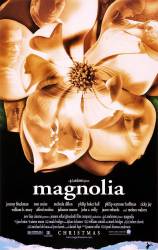
Question: What do the frogs stand for? Is it a biblical reference, or could the screenwriters just not think of a better way to wrap up?
Answer: It's much debated the exact meaning, but it's kind of a reference saying that seemingly impossible things do happen. As we see later in the film, people stuck in similarly impossible situations might just have a chance of getting out of them.
Answer: I believe that the Monet that Crown hides in his study is not the one that was stolen, it is a copy that he already had prepared. He can enjoy the copy knowing that the original (with the broken spreader bars) is also in his possession. The stolen original then goes to the forger who repairs the broken spreader bars, and then paints another painting (using water soluble paint) over the Monet, so he can "return" it to the museum 3 days later. It gets more complicated when he discovers that Russo is on to him so he has a second forgery made (even the edges forged to match) over the top of "Dogs Playing Poker." He doesn't know if it will be necessary, but given his research into his new adversary, he concocts this contingency. It is likely that he has many contingencies in place, but the "Monet with a ghost underneath" is the only one we get to see. Of course for my theory to hold water, there must be (or have been) that earlier forgery - unless it has been destroyed.
It's not the forgery that he takes out of the briefcase. Even if it were, he still put the Monet in the briefcase at the museum and would have had to break the frame to close the briefcase, thus also breaking the paint and tearing the canvas. The real answer is that it is just something that couldn't really happen, and the movie people don't want the viewer to notice.