
Question: Could someone please explain the goat in Xerxes' 'sex room' (for lack of a better word). The scene before Xerxes offers the hunchback Ephialtes everything, this scene begins with a shot of a goat with human hands playing an instrument and (I believe) smoking something. Does Xerxes have a goat fetish or something? Could someone kindly explain this for me.

Question: Maybe I missed something, but how was Esther able to fool everyone practically all her life and hide the fact that she's a 33-year old sociopath? When Kate finally learns the truth by getting the phone call, they show a photo of the "real" Esther, so at least those records of her exist somewhere. How could the boarding school not have known her true identity?
Answer: The boarding school was going by the falsified records that Esther had with her. They did not suspect anything, so they had no reason to dig any further at the time.
Answer: High quality makeup was an important part of her disguise as the alternative ending make apparent. Her fake freckles were the master's touch.

Question: Can vampires and werewolves be killed or injured by anything other than vampires and werewolves?
Answer: Aro also makes the argument that for the first time in our history humans pose a threat to our kind with their weapons that can destroy us. Theoretically any weapons that can tear apart and/or burn the vampires would work. So, yes, things other than vampires and werewolves can kill the vampires and werewolves.
Answer: Sure. The problem is that these films portray vampires and werewolves as having super-human abilities, so it'd be significantly harder for a regular person to kill one. But nothing about the films seems to indicate it's overtly impossible.
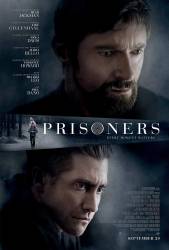
Question: What motivated Bob Taylor (an earlier abductee of the same perpetrators) to implicate himself in the current abductions by stealing the girls' clothing items and taking them to his home?
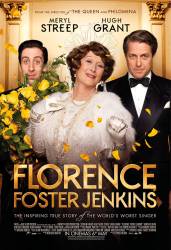
Question: Every time Florence would perform before a live audience, people would respond by either laughing at her or booing at her. With these kinds of reactions, how could Florence not realise that it was because nobody liked her singing and that they considered her a terrible singer?
Answer: People believe what they want to believe and can have an uncanny ability to filter out anything negative or unwanted. Eventually, she realised the truth.

Question: When Phoebe is on the phone with Ray, he mentions that the Ghostbusters fire house is now a Starbucks. In the post-credits scene, we see that Winston has purchased the fire house so the Ghostbusters can get back to business, but the fire house looks like it has been abandoned for several years and no other company ever took it over. Did I miss something here?
Answer: Ray was probably being sarcastic, and was simply making a general comment about gentrification in the area.
Answer: Perhaps nobody wanted to take over the place for a few reasons. Historical purpose, high cost... hauntings.?
Answer: It's been 40 years since the Ghostbusters disbanded, Ray mostly likely passed by the old place and saw a Starbucks there. It has since shut down.
But they left the ghost trap active? Not likely.

Question: Why didn't the lady who was originally with Mid-Size Sedan decay quicker, and we were able to see her body intact when she hit young Trent in the water?
Answer: Because she was 'freshly' dead when she hit Trent.

Question: Maybe I missed a major plot point, but why exactly does Tom kill his lover at the very end?
Chosen answer: Tom and his lover, Peter, are travelling on a boat. Meredith, who knows Tom as Dickie, is also on the boat. If they were to meet her while together, Tom's false identity would have been revealed. Peter would have been able to figure out that Tom actually murdered Dickie.
Answer: He had to kill him. Tom couldn't kill Meredith because she wasn't travelling alone, and Peter was.

Question: I found it odd that Slim's real name is never revealed. Why does she have this nickname, with no explanation as to why she never tells anyone her real name? Was there a deleted scene?
Answer: I wonder if the nickname is related to the difficult times in her life. Her father was not around. She and her mother did not have much money. Maybe she felt that she had a "slim chance" of life getting easier.
Answer: From memory her daughter says "I don't even think you're that slim" making a dig she's not that skinny, maybe it's due to her being thin?
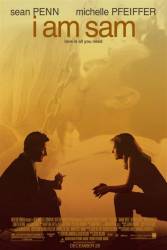
Question: Can 7-year old children be put under oath? (01:06:10)
Chosen answer: Yes, but I don't think it is possible for a child to understand the consequences behind the oath.

Question: Why was the man in the yellow suit wearing a band-aid on his pointer finger when he was talking to the young priest?
Answer: I looked over and over, he is not wearing a band-aid. My guess is, since he has bumpy fingers and it was dark, you just thought you saw a band-aid.


Question: Was the ghostwriter murdered? Why? The book had already been published, and he only discovered the truth about Ruth minutes before, so who would have wanted him dead?
Answer: Who would want him dead? Ruth, for one, as well as Professor Emmett (her CIA recruiter) and others involved in the conspiracy. Yes, the book had been published, but the secret message only comes across if one is in possession of all the knowledge that the writer had acquired, which the casual reader would not have. And minutes is plenty of time for Ruth, Emmett, or anyone else to make a phone call and arrange the hit.
The published book was a rewrite and would not have the secret message in the chapter beginnings.
The published book was a rewrite of the original manuscript. He gives her the original manuscript that he was working off, not a final draft.
We know the beginning of the book was rewritten as he didn't like it. Almost certainly, the clue is not in the published version of the book. Ruth was shocked to read the note and is delivering her speech so is unlikely to be complicit in the murder of the Ghostwriter. The ending suggests that Ruth, too, is little more than a pawn in the whole conspiracy.
Makes no sense, he was run down 2 minutes after she read it.

Question: Why did Arthur tell Aurora that Jim woke her up even though he promised to keep it a secret?
Answer: Being that Arthur is an android, he takes everything that is said literally and without analyzing it. Once Jim and Aurora began their romantic relationship, Aurora casually mentioned to Arthur that she and Jim have "no secrets" from one another, which Jim, without realizing the context or the consequences, confirmed. Arthur then interpreted it to mean that Aurora knew Jim had intentionally awakened her from the sleeping pod.
Answer: Because the ship had been malfunctioning due to collision with the asteroid it had effected Arthur as he is part of the vessel. This shows something is wrong with the ship as previously indicated, Arthur's sudden change of behaviour being integral to what is going on.
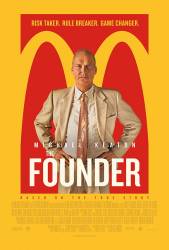
Question: Two questions are puzzling me. 1. Considering the tactics that Ray used to take control of McDonald's from the brothers, couldn't it be said that he cheated and conned the brothers out of their restaurant? 2. When Ray visits Mac in the hospital, he offers him a blank check to which the brothers agree. Why would they agree to such a thing instead of fighting to get their restaurant back?
Answer: 1. Yes, he pretty much cheated them out of their restaurant, royalties, intellectual property, etc. 2. Ray elaborates on this towards the end of the film when is on the phone with them. He's generated so much revenue from his real estate venture that he can afford to tie them up in court for years and drown them in legal fees if they decided to sue him for breach of contract. This is why they decide to surrender the company and everything that came with it in exchange for $1 million each and 1% perpetuity, the latter of which they never received.
Question: What happened to Jimmy's brother in the movie?
Answer: It's never fully revealed, it seems David and his brother were playing, probably doing something that requires parental supervisor and was unable to save him. Again, probably David was the older one and his father believed he should have known better.
Question: In the last scene of the film the ship appeared to me to be sailing in a westerly direction (sun sets in the west). Wouldn't the ship need to go east from USA to sail to Sierra Leone?
Chosen answer: It's likely that the scene was set in the morning, meaning they would be going east.

Question: Who's idea was it, or the reason, Kubrick decided to kill off Gunnery Sergeant Hartman? Was it to merely show the casualty of war?
Answer: It was Gustav Hasford's idea. It happened in the original book that the story is based on, "The Short Timers."
Answer: It was to show what someone might do (someone with a loaded gun and confronted by their abuser) whilst in the process of having a mental breakdown.
Question: At the end of the movie, Martin stabs Tavington in the stomach, and then in the throat. How does he know Tavington is really dead this time? Earlier in the film, Tavington pretended to be dead twice after Martin's sons shot him.
Answer: Guns were less powerful during Revolutionary times and the wounds were more survivable. Deep and ripping knife stabs to areas like the abdomen and the neck area are more likely to be fatal. Tavington may not die instantly, but he would probably bleed out and/or bleed internally fairly quickly.
Would being stabbed in the stomach, and in the throat have been enough to kill a person as tough as Tavington?
Absolutely. A deep stab to the stomach/intestinal area would be very deadly even today. Being stabbed directly in the throat would kill someone very fast due to a lack of air and inhaling blood into the lungs.
Question: Why did the Aboriginal manservant hit Matthew Quigley on the head when he threw Marston out of his own house, after telling Quigley he wanted him to kill aborigines?
Answer: He felt that if Quigley fought Marston he might have been killed. He hit him to save his life.
Answer: In fact, it was more likely that in the beginning of the film he was in more of an "Uncle Tom" (for lack of a better term) and hits him because he feels he should help his "master." He later feels bad and by the end he has come to his senses which is why he doesn't make the same mistake twice.
More like he was emboldened because his master is dead. If not Quigley would have got a second thrashing from the aborigines.
Answer: The scene is meant to show that Xerxes has exotic creatures/slaves from every corner of the world. In the reality of the film, a goat-headed musician would certainly qualify.