
Question: In the scene where Solara hijacks the car, why does the man who had Eli's sword in him stop her from starting the car, take out the blade, and get out from the car and kneel on the ground? Was he trying to say something to Solara or the leader?
Answer: Most likely, Redridge is giving Solara a chance to escape Carnegie's regime. At this point, he knows he's dying, but perhaps still wants the best for her. Remember, he had a crush on her the whole movie (blocking her while she was getting Eli's canteen filled, bargaining with Carnegie for her before chasing after them, even asking Eli nicely to give up the book after the gunfight in the house). I think it may also have been used as a self-redemption moment for one of the bad guys.
Question: How did Soze end up in the police station after he escaped the boat in the first place? If he had vanished after the bombing, he wouldn't have to make up the stories and he wouldn't have been identified by Kujan.
Answer: Soze ended up back under arrest and for some questioning as 'Verbal Kint'. He never really vanished, he's just playing two parts/people. He really vanishes off the scene by the end of the movie after he tricks Kujan.
With the exception of what's known to have happened on the dock, the entire story is a lie told by Verbal Kint to Agent Kujon. Kujon realises this after Kint leaves the office but not in time to catch up. The entire movie is about a habitual liar making up a story about what happened on the dock. He may be Keyser Soze or an alter-ego variant but even Keysers rep is subject to question as it was told by the same liar. Verbal himself said about Keaton, "He was a grounded guy, a cop. If you think the husband did it then you're right." He was telling on himself as sociopaths will do when they think they're smarter than everyone around them.
Answer: Kint/Soze ended up in the police station because he simply didn't get away in time.
Answer: All he had to do was kill them on the ship, blow it up, and leave. The whole BS story with the cops didn't even have to happen.
Question: When Jules and Vincent go to the students' flat at the beginning of the movie, Jules asks the guy on the couch to tell him where the briefcase is. He begins by saying "You. A flock of seagulls. Where is it?" What does he mean by calling him "a flock of seagulls"?
Chosen answer: It's a reference to his hairstyle; A Flock Of Seagulls was a new wave band from the early 1980s who were as well known for their frontman's unusual hairstyle as their sound. You can learn more about them here: http://en.wikipedia.org/wiki/A_Flock_of_Seagulls.
Question: What kind of power did each of the four friends have? Pete can locate things, but what about the other besides reading people's minds?
Answer: Each of the 4 main characters; Jonsie, Pete, Beaver and Henry could communicate with one another telepathically. In addition to this power, Jonie also possessed a photographic memory. Pete could find or locate things. Henry could read other people's minds. Beaver had premonitions or some sort of sixth sense. He made a phonecall to Jonsie, knowing something was wrong and wrote ssdd on the phone booth.
Question: Why did Dunbar's superior kill himself as Dunbar was being taken to his new post?
Answer: He was mentally disturbed and was depressed about being assigned to a "dead end" post with no chance at advancement. Dunbar, the hero, choosing to be assigned to the frontier, just pushed the poor soul over the edge.
In a word, the disease syphilis. The urinary tract problems and the Insanity are possible side effects.
What are you basing this on? What in the movie indicates that he has syphilis?
Answer: Dunbar's superior supported the British ("The King is dead... Long live the King" said with a heavy British accent) and was likely a closet-case Redcoat his entire US military career. It was not rare and many suicides were a result of that.
This claim is not supported by the movie. "The King is dead. Long live the King" is a common idiom referring to the passing of power to someone new. It most definitely does not literally refer to the English King. The movie is set in the middle of Queen Victoria's reign. As for your assertion that there were a large number of English loyalists in the Union Army three generations after the Revolutionary War seems highly unlikely. Can you cite evidence of this?
Question: When Baby helps Penny out by dancing with Johnny at the Sheldrake hotel, it is stated that it is Thursday night (when Penny has the abortion). At breakfast the next day Baby's dad says they are leaving tomorrow, even though they are paid up til Sunday. Thursday night is the first night that Baby and Johnny sleep together, yet they seem to be seeing each other for ages before Johnny even gets sacked, let alone the time that's past when he comes back. I don't see how all of this be squeezed into 2 days?
Answer: The father says they're leaving the next day, but when the mother asks why, he realizes he'd need to explain what happened, so he decides not to leave, and they stay for the rest of the trip as originally planned.
Answer: They were there for 3 weeks, so they had been together for at least 2 weeks.
Question: What does the sequence with the fake Brill have to do with anything? I've watched this scene several times and can't find its significance in the film.
Chosen answer: The fake Brill is an undercover federal agent trying to find out what Will Smith knows about the video tape.
Poor writing though as that character is never spoke of again.
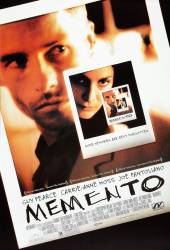
Question: I still don't understand why Leonard switches clothes with Jimmy and steals his car after he kills him. "I'd rather be mistaken for a dead guy than a killer." That makes absolutely no sense. Driving around in Jimmy's car and wearing his suit would make him the prime suspect in the investigation. He was much safer when he was just an anonymous guy driving around in a pickup truck.
Answer: It is never explicitly given. The most Leonard says on the subject is: "I'd rather be mistaken for a dead guy than a killer." Speculations include (you can make up your own motives as well) : (1) The clothes and car are so much nicer than his. If you are willing to kill someone: stealing is not really a "crime." Why not take the nicer objects? (2) It could be part of his "routine": Kill a man, take his clothes and car. The clothes he had on and the truck may be from the man he killed a year ago. (3) It could be that he wants to make the killer of his wife suffer even more, and takes his clothes as a way of humiliating him. Leonard takes the man's life-his clothes and car, which are wrapped up in his identity-just as the man took his. This idea seems to work with a theme in Memento about "Identity" (especially mistaken identity). Natalie thinks Leonard is Jimmy, then thinks he is Teddy, then learns he is Leonard. Teddy is "mistaken" for the second killer, Jimmy is "mistaken" for the 2nd killer. Sammy's story as a part of Leonard's story, etc. (4) It could "simply" be explained as a "plot device": Leonard has to do it, otherwise he won't find the note in "his pocket" and meet Natalie. (5) Leonard doesn't want to admit he's a murderer. He's lying to himself. If he's the victim, then he cannot be the murderer. (6) Leonard takes Jimmy's clothing as part of his routine of killing J.G.'s he becomes another person, he's the victim not the killer, thus "I'd rather be mistaken for a dead guy than a killer." and that's why he also takes his car, so he has to, once again, find his wife's killer and kill him.
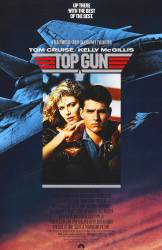
Question: This is probably a stupid question, but I know nothing at all about how these kind of aircrafts are flown. What exactly is the purpose of the guy sitting in the back of the plane? All they seem to do in the film is look in all directions for enemy aircrafts.
Answer: These aircraft are extremely complex; the presence of the backseater, variously known officially as the Weapon Systems Operator or Radar Intercept Officer, allows the pilot to focus on the immediate needs of flying the plane, as his backseater can take on many of the other tasks required. They serve as navigators, tacticians, bombardiers, weapons systems operators and, of course, as we see in the film, an extra set of eyes; they use their discretion in passing information to the pilot, ensuring that the pilot has only data that's important to the situation and isn't swamped by trivia. Without the distraction of having to fly the plane, they can often be better placed to coordinate between multiple planes, leading to situations where the backseater can be placed in command of the mission.

Question: When Uncle Buck is going to the party to get Bug, he is stopped at a red light and there are two parents in the car next to him. The father says, "don't go in there with that hat on, they'll kill you". Why would someone be killed for wearing a hat?
Answer: The Uncle Buck movie was made in the late 80s, near the end of the Cold War. And Because the hat resembles the Russian ushanka worn by Russian soldiers in that time, it can be said that wearing it might anger some, especially young Americans opposed to world events at the time.
Chosen answer: He's being sarcastic, as Buck says in the beginning some of his hats anger a lot of people, which probably connects to when his hat gets taken by one of the teenagers at the party.
Buck is actually referring to his aviator style hat in the earlier scene about people being angered by it. He's wearing the fedora style hat in the scene en route to the party. But I agree the guy was being sarcastic about teenagers.
The black purse bedside to the possible 'pile of bunched-up blankets' looks like Chanice's from later scenes; suggesting the writers or Hughes changed the script after the bedroom scene was shot to Buck's simpler but delightfully funny half-conversation with her on the phone.
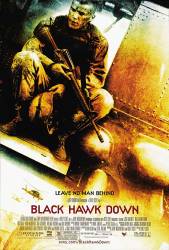
Question: Why did the film makers portray Sgt. Eversmann as the main character/hero of the story? I've read the book and his involvement was minimal.
Answer: The answer to this question is quite simple. Whenever any book is put on to the screen things must be glorified in order to catch the eye of a film goer. In movies like this one, heroes, brave men, and down right bad ass characters are what people need to see. If the movie was just like the book, there would be just a whole bunch of equally important characters, which is something very rarely seen in movies. So in short they made sgt Eversmann a main character simply because the movie needed one.
That makes sense but does anyone know why Eversmann was the specific soldier chosen as the focus for the movie?
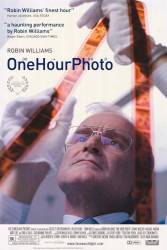
Question: Does the photo at the end with Sy and the family actually happen or is this just Sy imagining what life could have been like with them?
Chosen answer: This is mentioned on the DVD commentary - it's deilberately open ended so one can interpret it as either it's Sy imagining what he wants to happen OR it's what really happened.
As Neil Jones said, the ending is open for interpretation. However, I think there is reason to believe that Sy imagined the photo. It shows him and the family outside of their house, all looking happy together. Would they want to take such a photo with Sy after the incident at the hotel? And before the incident, they were probably not close enough with Sy that he would be in a photo taken at their home. Him and no other guests/visitors.
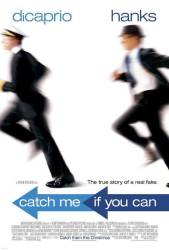
Question: What is the name of the airport that is featured during the ending scene in which Carl is following Frank and tells him "Nobody's chasing you" ? Or at least, what airport is it supposed to be?
Chosen answer: It is not mentioned, though it is likely Reagan (at the time Washington National) or Dulles, as they both work in Washington DC.
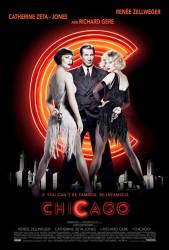
Question: What happened to the original poster with Roxy and Velma holding guns behind their backs? In all the more recent ones the guns are gone. Why?
Answer: I have both the DVD and the soundtrack. On the DVD cover they have the guns, however on the soundtrack cover, their arms look like they have been cut out of the picture along with the guns. Possibly somebody thought that it was a bad influence, since many young people enjoy the movie as well.
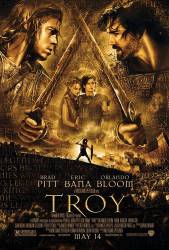
Question: What does Agamemnon yell right before the Greeks charge in the first battle?
Answer: He doesn't yell any words, just an expression of anguish over his brothers death.
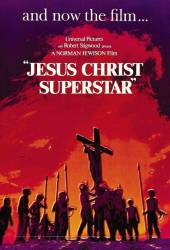
Question: At the very end when they show the sun setting over the hill, you can see something/someone moving across the screen, just under the ground. Is this done to symbolize something, or was it a sort of camera problem?
Answer: According to Ted Neeley and Norman Jewison on the DVD commentary, the shepherd walking across the frame in the final shot of the film was never intended to be there, and just happened across the shot as they were filming. Because of the significance of a shepherd in the teachings of Christ, Jewison and the crew were struck profoundly by the timing of this shepherd crossing the field, and kept the shot. They got a perfect sunset, as well as a subtle depiction of the resurrection.
Question: Robbie's soldier friend (I think his name was Nettle) was so calm and compassionate with him. He said that the hiding place was in reality the beach cottage and he protects Robbie from the angry soldiers. Did he do that because he saw how sick he is and probably knew, deep inside, that Robbie will not survive the night until the evacuation, and wanted to give him a peaceful end? Why does he take Robbie's letters and pictures with him?
Answer: I think he realizes that Robbie most likely won't make it. He takes the letters so that he can get them back to his loved ones. He probably knows that there is a last goodbye to someone (his girl/his mother) in them. And, if nothing else, even if his body doesn't make it back to them, they have a piece of him to cherish.
Question: Why is Harry not punished by Snape for almost killing Malfoy in the bathroom?
Chosen answer: Snape wants to know how Harry knew Sectum Sempra. As shown by him using Occumelancy to see where his copy of Advanced Potion making is. But at the same time, if Snape punished Harry for a spell in a book, Harry could show it to Dumbledore, who would recognise Snape's handwriting. Additionally, Harry was certainly punished in the book - he got detention with Snape every Saturday for the rest of the term. The movie most likely had to cut this for time issues, and also perhaps because the scene is more dramatic if Snape only silently glares at him.
Chosen answer: The first time, Jim says "Nanika no machigai desu. Bokutachi wa minna tomodachi desu yone. Senso no sei desu." This roughly translates to "There has been some sort of mistake. We are all friends aren't we? It is the war's fault." The second time, Jim only says "Nanika no machigai desu. Bokutachi wa minna..." and then gets pushed aside. "There has been a mistake, we are all...". I hope that helps.