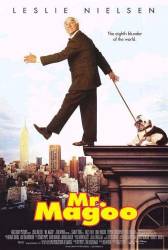
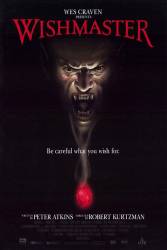
Question: Can the Djinn only give bad wishes according to his interpretation of them or does he just do it because he is pure evil and "enjoys" giving people exactly what they asked for, just not what they actually meant? For example could he, if he wanted, have given the shop assistant a lifetime of beauty without turning her into a mannequin?
Answer: The Djinn is a demon, it only knows how to hurt people. The wish he offers a person is just a way for the demon to buy the soul of that person, making use of the emotions inside someone to have them wish something. The wish works how the Djinn wants it to work, not what the victim wants it to do, that's irrelevant to him. Yes, he has the powers to give people what they actually want, but he doesn't as he doesn't care about people.
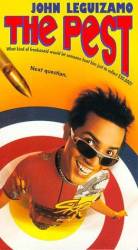
Question: When the police show up to arrest Gustav, why did he say that he doesn't recognize their authority? He knows who they are and what they're going to do so why does he say he doesn't?
Answer: He's a rich man who believes he is above the law. They have no authority to arrest him.

Question: When Morrow bites off Eboshi's arm, the wolf's head has been somehow cut off her body. When the Forest Spirit took her life away, the head was attached. How did the head become detached?
Answer: You can see part of the ooze flowing across Moro's neck, thus it gets severed.
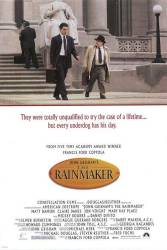
Question: Why is Danny Glover as judge Tyrone Kipler not credited?
Answer: I don't know how prevalent this is (or how it actually works), but one possibility would be that he was under contract with a particular agency (or company/ business) and could only receive credit for work performed under this contract and/or no other agency could benefit from using him. His name cannot show up in something he did outside of that contract.
Chosen answer: I don't know why, but he asked not to be in the credits.
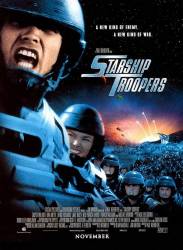
Question: What's going on with Rico and Carl in the card guessing scene? I originally thought Rico was trying to guess the value of the unturned card was but then he says it's the ace of spades and it turns out to be exactly that yet he still gets it wrong. Could someone please explain what's happening there?
Answer: The card face up is the one he's trying to guess. The card that flips over is his guess (you can see him hit a pad when he says "ace of spades".) So he is trying to use mental powers to guess the card that is face up (which he can't see as he has his back to it), and (presumably so the computer can track his results better) he makes his choice on a keypad, which then turns over the card on the screen (which is why the card is what he said, yet still wrong).
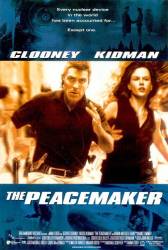
Question: At the end of the movie, George Clooney and Nicole Kidman are trying to remove one of the small explosive plates that surround the plutonium sphere in a nuclear weapon. Couldn't they have just disconnected the wire connected to the explosive plate to prevent that trigger charge detonating properly? Or would it have detonated because it was touching the other plates?
Answer: Presumably they couldn't take the risk that removing the wire would stop that plate detonating, and/or were worried that there might be a failsafe to detect a wire being cut. Physically removing the charge seemed like the safer bet.
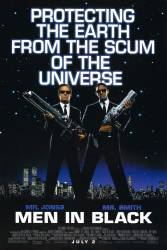
Question: Why did Mikey lose it when he noticed that the border patrol officer was watching them? He had no problem with K and the other agent seeing him.
Answer: K and his partner both knew about aliens living on Earth, and made it their duty to make sure no one else knew about it. When the trooper saw Mikey in his real form, and Mikey spotted him, he attacked the trooper in an attempt to kill him, probably to ensure that the trooper wouldn't be alive to expose them. Since K and the other agent were already aware of Mikey, as they had dealings with him before, Mikey didn't attack them.
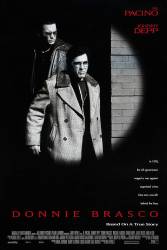
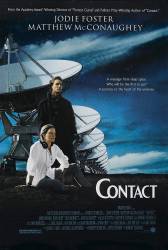
Question: If you read the book version of Contact you know that the stuff about transcendental numbers and the Artist's Signature was left out of the movie. This makes no sense to me, since it's not only the real ending, it's the whole POINT of the story. Without this information, the story's fundamental question (does God exist?) is not answered in the movie. Does anyone know why this was left out?
Answer: If anything, I think the film's producers deliberately left godly topics unaddressed (and questions dangling, unanswered) because they didn't want to alienate any particular audience. However, we know the producers of "Contact" certainly did vilify religion through the sinister scenes with Joseph, the evangelical extremist. At the same time, the film created empathy for the president's glib theological adviser, Palmer Joss. So, I don't think the film was shying away from religious topics, and I think it was pretty fair to the religious viewpoint, for the most part. But this movie wasn't about religion; it was about a primitive, materialistic, self-centered and aggressive species (humanity) reluctantly acknowledging the existence of vastly more intelligent and even godlike entities throughout the cosmos. Even the first-contact entities, advanced as they are, acknowledge other entities much more ancient and much more advanced (the virtual architects of the space/time conduit). The implication was that we live in a universe that may be populated with many intelligent entities that answer every human criteria of godhood. Ellie's narrow-minded atheism was surely shaken to its foundation by her experience; and, while she didn't "convert" to archaic earthly religions, she was spiritually a different person upon her return. The film, however, is open-ended and fence-straddling and doesn't presume to definitively answer the question of the existence of god, leaving it up to the audience to decide.
Answer: The film chooses to focus on Ellie's personal journey and how she deals with and comes to terms with what happens - it doesn't really involve God at all, other than the inclusion of Palmer Joss as a religious advocate, choosing to restrict itself to the much less theologically controversial theme of a straight first contact scenario, without the religious overtones. Given the depth of feeling on religious matters in the US, it's hardly surprising that the filmmakers preferred to leave this particular hot topic out. While Carl Sagan died during production of the film, he both co-produced and was involved in the story process, so he was clearly not concerned about this change.
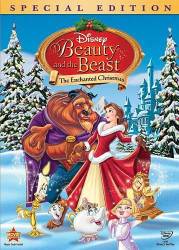
Question: How long exactly has Belle been imprisoned in the Beast's castle? Asking because the first movie didn't look like Christmas was being celebrated by anyone.
Answer: It's unknown how long Belle was at the castle. This sequel, The Enchanted Christmas, was made as an afterthought to the original Beauty and the Beast film, and there was no consideration or explanation about how this would fit into the original timeline. This is a stand-alone film, and it is typical of how the more popular Disney animated films, such as The Little Mermaid, Aladdin, etc. have added-on stories that are usually released straight-to-video.
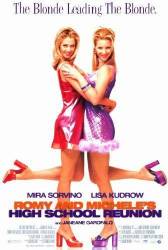
Question: In one of the flashbacks, after Kristy put the magnets on Michele's back, why did she eat Romy's hamburger? This just struck me as odd since the "popular girls" in movies are usually portrayed as dieting often, and they usually don't eat the junk food that the non-popular characters eat.
Answer: She ate it because she's a bitch and wanted to hurt Romy. She didn't take it to eat for food.
Answer: It was a way of her showing Romy that being popular (in high school) comes with "power" over the less popular students and ability to do what she wants without fear of retribution. Conversely, in order to try to be liked by a popular student, a less popular student will yield to the popular student and/or give (let her have) anything she wants, including her lunch. [It doesn't always work this way.].
Question: Someone correct me if I'm wrong, but the credits show that Panchito Gomez played young Abraham. I've seen Panchito Gomez in 80's movies such as Tuff Turf and he doesn't resemble at all the actor playing young Abraham. However, he DOES resemble the gentleman in the cowboy hat who stiffs Abraham money for Selena's performance and says "She's just a woman." I always wondered if the credits made a mistake. Anyone know?
Answer: Looking at the credits on IMDB it does show that Panchito Gomez played young Abraham in Selena as well as the role in Tuff Turf. Given that 12 years had passed between the two movies, it's possible that Panchito had gotten older and didn't look like he was when he was 22 compared to mid 30s.
Question: Who is the man in the picture in the office of the hospital? Is it supposed to be Nick Nolte when he was young, working as the night watchman?
Chosen answer: It is intended as a nod to the original 1994 version of the film, which supposedly featured the same picture in the watchman's booth.
Question: What's the name of the song that the inmates at the asylum are dancing to?
Answer: "(Not Just) Knee Deep" by George Clinton And The Funkadelics.
Question: What happened to the terrorist Harrison Ford apprehended? Did he parachute with everyone else?
Chosen answer: He fell out the back without a parachute when the door blew open. We see him both tumble off the ramp, and another shot of him falling from below.
Question: When Lolita enters Humbert's room for the very first time, she asks him if she's getting a zit. According to Google, zit was used to define a pimple circa 1966. The movie takes place in 1947. Was the slang used back then?
Answer: It could have been. Lolita might have used a relatively new term, and also how can one really pinpoint the first time a term was used? Maybe it was more mainstream in 1966, but kids could have been using the expression for several years.
Answer: If it was then they wouldn't have tried killing her after she was paid.
Rob245