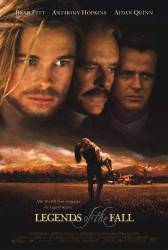
Question: Why is Decker wanted by the police? When the police came to visit the ranch, Decker notices them, tips his hat and walks away. The police have a sketch of Decker that says he is WANTED.
Answer: Very early in the story when one stab is narrating, he's kind of introducing everybody and makes a reference about Decker having "illegally" married an Indian woman, and there are several references to the fact that the father was not happy working for a government that was killing Indians and also went out of his way to make sure they were in no way discriminated against. I think it's possible that may be why they were looking for Decker and why Colonel went out of his way to hide his living there.
I believe Decker had been a bootlegger. That would be the reason why the O'Banions (sellers of booze themselves), were with the sheriff when they came looking for Decker at the Ludlow's ranch. And also, the reason why the O'Banions didn't want to say what Decker was wanted for because.it was their own personal vendetta concerning bootleg whiskey. Maybe they had reason to believe that he was still selling bootleg whiskey around those parts. Also, later in the movie, when Tristan returns home after 7 years, Decker says to him "There's good money in bootlegging if you know what you're doing." And, Decker says that with a huge smile. Like he definitely knew what he was talking about and could definitely give Tristan some pointers about being a bootlegger.
Alcohol wasn't illegal until well after World War 1. The initial scene with the O'Bannons takes place before the boys go off to war, and it's stated afterwards that Alfred voted for the Volstead Act making alcohol illegal.
Not sure about this. At the time the sheriff comes looking for Decker, it's roughly 1915, and liquor is not yet illegal.
Answer: I don't think it's ever mentioned. The Ludlows almost certainly already know, and in the scene mentioned, the cops won't say.
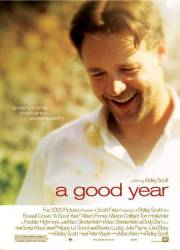
Question: At the beginning of the film Fanny is at her cafe and stops to look at a Van Gogh print above the cash register. The print has Provence printed on it in yellow. At the end of the film she looks at the print but that time there is nothing printed at the bottom of print. What does this mean?
Answer: I think the Van Gogh is really part of his buy-out package from the brokerage. This is the copy which was hanging on the boss' wall, but not the original which the boss kept in the vault.
Question: If Alice can see the future, why did she not protect Bella from Jasper's attack before it happened at Bella's birthday party?
Question: Is it true that the song "I Don't Dance" was specifically written for Corbin and Lucas because they both auditioned for the role of Ryan, but since Lucas was a better dancer, he got the part?
Answer: It is just a coincidence. Corbin's character is all about sports and feels that Ryan is not in the same league when it comes to baseball (pardon the pun). Ryan, on the other hand, wants to prove that dancing takes just as much athleticism and dedication as sports therefore the game and song are a showdown between two cliques you generally find in high school, the athletes and the drama club.
Question: I don't get the joke Chris told Liz in the cabin motel about the Zen master that ordered a hotdog with everything. What was funny?
Chosen answer: The Zen master tells the hotdog vendor to "Make me one with everything," a pun, of sorts, on the Zen philosophy of becoming one with the universe.
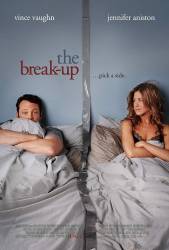
Question: When Addie sets Brooke up on a date with her husband Andrew's friend, Brooke is uninterested during the date. At one point Addie calls her to help her get out of the date and the first thing she says ism "Is this when I'm supposed to call?" How did Brooke and Addie plan this? Brooke was pretending to be intrigued by the guy's story about his job and listening intently therefore she couldn't have been communicating with Addie by texting during the date and they couldn't have planned it ahead of time.
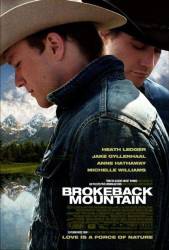
Question: Why were Jack and Ennis fighting on the hill on Brokeback Mountain? Ennis's nosebleed looked pretty serious.
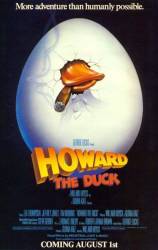
Question: Why is the secretary was so rude to Howard when he tried to find the job?
Answer: As she said to Howard, she believed that he was using his "outlandish" appearance to be unable to find work and collect money through unemployment. She's probably dealt with people who did the same thing and was eventually sick of it.
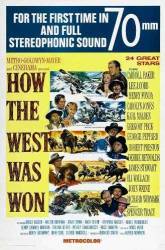
Question: Doesn't the water tower fall completely to the ground during the buffalo stampede in the original theatrical release? It's missing in the DVD release.
Answer: Yes, the water tower did indeed fall completely over in the initial release. I saw it fall all the way to the ground and release a flood of water. What happened was that the tower fell on the rump of one of the buffaloes, and the buffalo stumbled and got up and continued running. Later the animal rights people objected to the scene, so it was removed from the DVD, and all that was left was the tower shown leaning over.
Answer: Footage of the water tower falling has NEVER appeared in the film. My first viewing of the film was in Cinerama in 1962 and the tower doesn't fall over. It doubtless was supposed to fall over but for technical reasons it didn't come out right, and so no footage beyond seeing it wobble a bit has ever been in the film.
This answer is incorrect. The original release did have the tower fall over completely. There's even a picture of the flooding after it falls over. It was since deleted. Http://www.daveswarbirds.com/HTWWW/deleted_scenes.htm.
I agree. The tower fell and water poured out. I saw this movie in Cinerama in 1963. For years later, I wondered why I never saw that scene in its entirety again. A shame that for a mistake that caused the unintentional death of an animal, the scene should no longer be viewed by anyone.
Answer: I saw the film in Cinerama the week it came out and the water tower didn't fall. I remember being puzzled by the shot of it falling in the souvenir program.
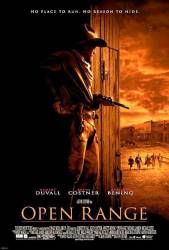
Question: When Baxter and his men ride into town, he brings 8 hired guns with him for a total of 9; but when the fight starts, there are only 8. Baxter and 4 men confront Charlie and Boss, in the street, and 3 go round behind the buildings. What happened to the 9th man?
Answer: I believe he is the one being chased by the townfolks, after the gunfight is over.
Answer: Maybe he stayed behind to get the sheriff and deputies on their feet.
Answer: It's just an error in the movie. Maybe that ninth guy will be the lead bad guy in Open Range 2.
Answer: The man you see being shot at in the end was the man who ran off once the sheriff had the kid, and Baxter was going to kill him. So, just before the shooting started again, this man ran off away from Baxter. What you see the townsfolk shooting at is this man who ran off just before the end, where Baxter and the sheriff had the boy and were counting down.
Answer: I noticed this as well. The person shot at the end of the film is the same man that was with the sheriff when they were held in the jail. He was a deputy and did not ride in with the land baron.
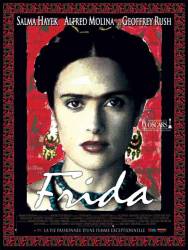
Question: What were the Spanish lyrics to the song Frida was singing in the bar just before she started the brawl, and is that the literal translation that is on the subtitles? I know what the movie says the translation is, but I can't get the words the same when I try to translate back into Spanish.
Answer: The Song Frida is singing is one of Diego´s most favourite songs, La Bruja (On the soundtrack performed by Lila Downs). http://www.musicbrother.com/index.php?page=song&id=167156 (german page, but spanish lyrics).
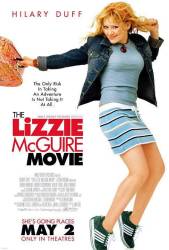
Question: How old are Lizzie, Gordo and all their classmates meant to be in the film?
Answer: In the TV show, they are 13-14 years old. Assuming this is after the TV show, and we never see Lizzie, Gordo or Miranda celebrating their 14th birthdays (we see Kate celebrating her '14th' birthday and Gordo celebrating his Bar Mitzfah a year late), Lizzie and Miranda are 13-14, Gordo is 14 and Kate is 15 (it is mentioned in an earlier episode that she was held back a year in Kindergarten.) This is only an assumption, due to the TV show.
Question: Is there another version of the movie? Because when I saw it on TV some scenes were cut or changed. It wasn't to remove swearing or anything, it was completely random, for example they cut Dave asking Buddy if he can eat Fiddle Faddles, and they changed Chuck's line "That's a letter I'm writing to Geraldo Rivera" to "That's a letter I'm writing to my father." This version is the version they use on the website Subzin, a website for finding movie quotes. Can someone please explain this version? What it is, how it's different, where it's used, etc.
Answer: It's really not uncommon for movies to remove bits and pieces when broadcast on TV. Movies aren't just cut for content, they're also cut for timing. (Ex. "Shanghai Knights" used to be absolutely butchered when shown on cable - there were entire scenes missing, which created glaring mistakes.) It's also not uncommon for TV versions or foreign releases to change or remove cultural references, or use alternate takes depending on the language used. Depending on where you live, it could very easily just be that the version you're seeing is one of these alternate versions that was then also trimmed down to fit a TV timeblock.
Question: Where does Bonnie get all her clothes from? From what we see she goes off with Clyde wearing the yellow dress and doesn't have any bags or anything with her. Are we supposed to think she steals them?
Answer: Bonnie and Clyde were bank robbers, remember - it's quite reasonable that Bonnie would buy herself some clothes with the proceeds.
Question: When Lightning is crushed by the statue at the end of the movie, he sends out dozens of bolts of energy before he dies. The final wisp of electricity forms a Chinese character. Does anyone know what it means?
Answer: It's the symbol for "carpenter" after the director John Carpenter.
Question: This is a two-part question: 1. How does Winona Ryder get hold of the journal of Sandler's uncle? 2. Why'd she dye her hair?
Answer: Babe Bennett stole Preston Blake's journal from Longfellow Deeds. As for why she dyed her hair, it was probably part of her disguise. She was a TV journalist pretending to be someone else (as Pam Dawson) so she could get a story on Longfellow.
Answer: I would think so.