Question: What happened to Rose's mother after the sinking? I'm curious because she made it very clear while she was lacing up Rose's corset, that she was entirely dependent on Rose's match with Cal to survive. Whether she was exaggerating or not, she made the statement that she would be poor and in the workhouses if not for the marriage and Cal's fortune to support them. Obviously, since Rose is presumed dead after the sinking, she did not marry Cal and her mother was not able to benefit from his money. So would she then, in fact, end up poor and in the workhouses as she said? Rose didn't just abandon Cal and that lifestyle to start anew, she also had to abandon her mother. So did she leave her mother to be a poor and squandering worker? At the end of the movie, Rose gives her account of Cal and what happened to him in the following years, but never anything about her mother. I realize this question would probably be more speculation than a factual answer, but I just wondered if there were some clues at the end that I maybe didn't pick up on or if there were some "DVD bonus" or behind the scenes I haven't seen that answered this.
Answer: I've wondered that too. I think it was easier to find out what happened to Cal because she said "it was in all the papers." As for her mother, it likely would have only been in the papers local to where she lived when she passed away. This was in an era before television and of course way before the internet. So I think the only way Rose would have been able to keep track of her mom would have been to live in the area or do some investigation. It seems unlikely she wanted to do either one, especially since it would have 'given it away" that Rose had survived in the first place. I agree with the other statements that Cal would have felt obligated to take care of her, and that the people she owed money to would have tried to collect on it as it would have been in "bad form" under the circumstances.
Answer: Her mother's big problem was a heap of debts. It would have looked badly on the debt collectors to go hovering around her after what was assumed to have happened, and in a society where one's reputation was valued highly. They probably simply gave her a degree of debt forgiveness in her bereavement, then Cal, insurance, and even her Mother herself taking a second (rich) husband could've taken care of what was left.
Question: At Jack Jr's birthday party, you don't see Shelby's head at all... It was her 'body' because later that day she is wearing the same shirt when she gets her hair cut. Was there a sit in for Julia Roberts in that scene?
Answer: I believe it is because the child playing Jack Jr. was basically crying through this whole scene, as you can see. It's most likely his (actually her, as the real baby was a girl) real mother holding him to calm him down. Also, when the family is saying "Blow, blow," you can hear a female voice that is neither Julia Roberts or Sally Field.
When she is sitting with Jack Jr, it is before she goes to get her hair cut. When she tells M'Lynn she wants to cut her hair, she is wearing it in a banana clip and you can see the hair past her shoulders. When "she's" sitting with Jack Jr, there's no hair to be seen. Total stand in.
Daniel Camp is the actor who played Jack Jr.
Along with Daniel two other children played Jack Jr, C. Houser and Clara Gabrielle.
Answer: Yes, there was a sit-in. My mom was Julia's double for this movie. Jack Jr. was played by two babies, my brother being one of them. My brother was upset during this scene and was being held by our mom.
Answer: I believe that Jack Jr is being held by a man. When you freeze the scene, you can see facial hair on the chin and when the person says "blow, blow" it sounds to be a man trying to sound like a woman.
I actually think it's a man, too. The person's hands seem to be deliberately hidden.
Answer: I agree with the other answers that this was probably the child's real mother and not Julia Roberts. It was probably because the boy was upset, but major movies do use second and third-unit directors and often shoot scenes using a body-double as a stand-ins so that other scenes can be filmed simultaneously with the principal actors. It shortens the film's production time and is more economical. It's possible that Roberts was shooting another scene elsewhere. Also, it's definitely not Jack's father (Dylan McDermott) holding him as he is sitting next to Shelby and is saying "blow." It was also not Shelby's father (Tom Skerrit) holding Jack, as he is videotaping the party at the opposite end of the table.
Answer: It was said that the child actor was crying, so they had his real mother sit with him in that scene instead of Julia.
Answer: No. It wasn't a man. It was the child's real mother holding her kid during the scene. The kid wouldn't shut up with the crying and only would calm itself sitting on the mother's lap.
Answer: It's Shelby's father that is holding him.
Shelby's father is across the table taking pictures.
Question: Is there an alternate ending? Did Ving Rhames ever wear a sweater in the last scene?
Answer: I have repeatedly told people he wore a sweater. There has to be one, more original, that has him in a sweater. I remember almost like a Easter yellow.
It should be noted Rhames does wear what looks like a yellow sweater in "Pulp Fiction." Although I wouldn't call it Easter Yellow.
I saw Ving Rhames in a navy crewneck sweater in the closing shots of this film.
I also can swear I saw an ending with Ving Rhames wearing a sweater. This would be in keeping with Klein asking him earlier in the film if he ever wears sweaters.
Answer: No. There is no version/ending where Agent Duane Stevenson wears a sweater at the end.
Answer: My wife and I also believe that Agent Duane Stevenson wore a sweater at the end of the movie on the VHS version. The DVD version switched Duane with suit, white shirt and tie - no sweater.
Answer: I saw Ving Rhames in a navy crewneck sweater at the end of movie shot.
Question: What is the purpose or the story behind the little stuffed dog that appears in so many scenes? It's on the table when the guys are playing poker, it appears in the bowling scene too.
Answer: Presumably it's a favorite mascot of the group. There's likely no backstory per se, it's just something the filmmakers did to add to sense that these people have been together for a very long time.
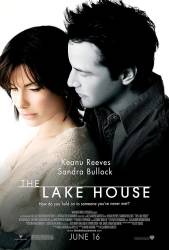
Question: Why did Alex have to wait until Valentine's Day 2008 to meet Kate? Even assuming for the sake of argument that the "time-traveling" letters stopped after Alex avoided the bus accident on "his" Valentine's Day 2006, Alex certainly knew how to find Kate at that time - and vice versa. The two-year gap where Kate had not known about Alex had closed by that time, and each knew about the other.
Answer: The movie is not about them trying to find ways to meet. They are not trying that hard to meet and the time distance is a metaphor. I think the movie misses the tension that she is trepidatious about meeting and he is trying to respect that. He gets killed the first time for trying to force it! This shows when the stack of letters is piling away. She is worried he is a coward who will not be able to handle real romance. This is shown in his retreat to build mass produced houses and has something to do with his mom/dad. She's the doctor, he's the architect: she saves people for a living and is hung up about her own father's death. It's only when it's life or death that she gets over it and he also figures himself out and stops trying to fix everything.
Answer: Kate asked him to wait, and come in 2008, so that's what he did. Likely they could have found each other before then, but it might not have even occurred to either of them.
They started communicating after he died in 2006 (her time) on his way to see her, but 2004 his time, neither of them knew he had died by this time so there was no way they could have met, my question is how did he know to go and meet her the first time if they hadn't started communicating yet?
They had been communicating for 2 years at that point - his time. Hence why he was going to meet her and got killed in the process.

Question: What kind of car did Ashton Kutcher borrow from his friend at the end of the movie?
Answer: 1971 Plymouth Satellite hardtop. You can see the Satellite's blue/white/red flag emblem on the grill.
Question: What is the trailer both were watching on TV while they were having some snacks in bed in the Aspen hotel room?
Answer: It was a commercial for Pacific Bell. A telephone company.
Question: How did they make Kirk Douglas have a peg leg? How was he able to walk that way?
Answer: This movie predates the more advanced CGI that would be used these days. In older films, actors portraying an amputee would have their leg (or arm) bent back and strapped to their body. A prosthetic peg leg would be attacked to the lower appendage. The actors were also filmed from strategic vantage points so the bent part of the limb didn't show. When Douglas is seen driving a wagon, the seat was probably constructed so that his lower leg fit into a hidden compartment and the peg leg was attached on top to be visible. Douglas also wore rather baggy pants, and that would help conceal his bent leg.
Question: Can anyone translate what Adam and his dad are saying when Adam is a teenager and they are in the classroom?
Answer: Adam: Tempus fugit (Latin) = Time flies. Dad: Que les bons temps roulent! (French) = How good times roll! Adam: Geradeaus, dann links (German) = Straightforward, then left. Dad: Sorgen Sie bitte dafür, dass die [das] Gepäck sorgfältig behandelt werden [wird] (German) = Please make sure that this luggage will be treated carefully. Adam: Haben Sie etwas Nettes in Leder? (German) = Do you have something nice in leather?
Answer: Haben Sie etwas in diesem, Lehrer? Do you have something (of yours) inside it (my luggage), teacher? Kind of. Why (else) are you concerned about my luggage? This too makes some sense (of humour, sarcasm, or something...) Maybe. I don't know.
Thank you for this post. Being fluent in German, this dialogue always baffled me. Maybe it wasn't supposed to be clear, just some semi-gibberish posing as German. My dad always asked me what that meant, and I could never understand the meaning of the second sentence. Truth be told, I really don't like when they make it seem clear and laugh about it, whereas the viewers are none the wiser and feel dumb.
I have always been confused by that last line, too. I thought maybe it was because I’m an American and a non-native German speaker. I’m glad it wasn’t just me.

Question: How did Larry find out what club Alice/Jane works at? Did he just find her there by coincidence?
Answer: It appears so. Nothing else suggested he knew where she worked. More that he was just going to different clubs and drinking and came across the club Alice was working at.
I think he knew exactly where to find her. He's a doctor and often doctors are known to have that "God" complex. I think he wanted to gain control of his relationship with Anna. To win Anna back he had to manipulate all the players including Alice/ Jane. He probably researched her and found her. That's why he knew Alice/Jane was not her real name. He was low key stalking all of them, to get Anna back.

Question: I read that Evan Rachel Wood's character, Tracy, is supposed to be Nikki Reed at the age when she was having the experiences that Tracy went through. Was the character Evie based on a girl that Nikki knew in real life?
Answer: Evie was based off several people in Nikki Reed's life.

Question: ***SPOILER WARNING*** I don't understanding the ending to this film. What was Mandy's reason for killing people? Is this a flawed character motivation, or did I miss something?
Answer: The reason for Mandy and Emmett killing off the characters is pretty much left open for interpretation, but it seems the reason they killed them was because before Mandy became "hot over the summer" (as Dylan says at the beginning), Emmett and Mandy were treated like outcasts, and after Dylan's death, Emmett probably took a lot of the blame. It's possible that Emmett and Mandy were tired of how the popular crowd had treated them before. At the end, they made a pact to kill themselves. But after finding out that Emmett is just like the others, Mandy backs out and decides not to, but Emmett doesn't take it very well and decides to kill her too. Mandy fights him off, and she saves Garth, who seems to be the only one at the ranch who saw her as a human being and treated her with respect. So any of these reasons may have been motivation (although their actions are extreme), but overall there seems to be no obvious reason.
Answer: It's likely that Mandy developed a taste for murder subsequent to the Dylan incident, in which she evidently was more complicit than would seem at first glance.
Question: Would the labels on the Budweiser bottles be the same in the older era during the beginning of the movie, as it is in the latter part of the movie (1994)?
Answer: The color and design of the label hasn't changed in decades, although the script on it has changed some over time. They all look almost identical from a distance.
Question: Was Guy in on the cruel revenge prank to put dog food on Aldys, or did he just want to dance with her, and didn't know anything about it?
Answer: Over the course of the evening, Guy learns that being popular isn't the most important thing in the world and wanted to make peace with Aldys. I think he was genuinely being a nice guy and wasn't in on the prank.
Question: Why doesn't Prince John like having his hand shaken?
Answer: Robin Hood, while disguised as a stork, wouldn't stop shaking Prince John's hand and it was starting to annoy him. Prince John was also robbed by Robin Hood earlier in the movie so he wanted to make sure that the jewels in his rings weren't stolen again.

Question: Is there some reason that we are considently seeing planes fly over her house? Is that supposed to symbolize something?
Answer: Jess' house is supposed to be on the main flight path of Heathrow airport. Her mum and dad work there.
Answer: I doubt it; it's probably because the film is set in the Borough of Hounslow, which is in the flight paths of many London airports, including Heathrow.
Question: At one point, Melanie mentions that Jake got her pregnant several years ago. Was the baby stillborn or did she get an abortion?
Answer: She says something to the effect of "mother nature had other plans" leading audience to believe she had a miscarriage.
Answer: She had an abortion because she said it would have altered her future plans and admitted to feeling so ashamed.
Melanie did not have an abortion. When she's talking to Jake's mother, Stella Kay, at the bar, it's mentioned that Melanie had a miscarriage. Melanie felt ashamed because after losing the baby, she ran out on Jake and their marriage to pursue her own goals in New York.

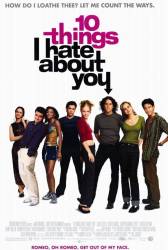
Answer: A 1964 Dodge Dart.
Answer: Don't know if it's confirmed but that's believed to be Heath Ledger's Dodge Dart that he had at the time.
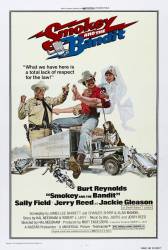
Question: What did the trooper mean when he said, "Didn't you know this ain't Saturday"? It always makes me wonder.
Answer: The trooper on the motorcycle had just landed in the water. In older days, the typical day to take a bath, wash hair, etc. was Saturday. The trooper in the car (once he saw the motorcycle trooper was okay and wet) just made a joke about him taking a bath.
It was a redneck joke, playing off the stereotype that hillbillies bathe once a week on Saturday or Sunday.
Answer: I think the trooper makes this joke in reference to Evel Knievel, a popular performer of the day. His shows, which prominently featured motorcycle stunts (particularly jumping) usually occurred on the weekends (i.e. Saturday).
Chosen answer: Because she is considered, in a minor sense, a "villain" in this film for forcing her daughter into a loveless arranged marriage to satisfy her personal wants, most fans probably speculate that she became a poor and penniless seamstress and lived out her life working in a factory. Of course, this is possible, without the financial security of the arranged marriage between Cal and Rose. However, it is difficult to believe that a woman of such status, and who has so many wealthy and powerful friends, would be allowed to languish in abject poverty doing menial labors. I would tend to believe that she probably sold a number of her possessions for money (she did mention that as part of the humiliation she would face if Rose were to refuse Cal's affections), and probably lived off the kindness of others. Given that her daughter was betrothed to a Hockley, his family might have felt an obligation to assist her in finding a suitable living arrangement and a situation for employment. It is also possible that she re-married into wealth. However, this is more unlikely, mainly because back in 1912, it was considered scandalous to re-marry, especially at Ruth's age. However, since Ruth does not make an appearance after surviving the sinking of the Titanic in a lifeboat number 6 (next to Molly Brown), nor is she mentioned again, her fate is left unknown and subject only to speculation.
Michael Albert
In that era, with Rose betrothed to Call, Cal would most definitely have provided for Ruth in the lifestyle she was accustomed to. As Cal angrily raged at Rose the morning after her excursion below decks, "You are my wife in custom if not yet in practice ", thus, society would have viewed him a villain had he not cared for Ruth once it was assumed Rose was dead.