
Question: I heard that the marble ashtray that Bedelia uses to kill her father Nathan in the "Father's Day" segment appears in all the stories. Does anyone know the specific scenes it shows up in in the other ones?
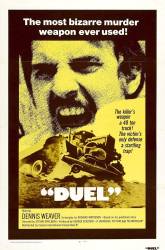
Question: Why did the truck driver want to kill David Mann?
Answer: It's never explained why but, judging from the numerous license plates from other vehicles attached to his truck, the truck driver is a serial killer and was just targeting people at random and decided to make David his next target.
Trucks used to have to be registered in multiple states if they were going to operate in them. It was very common to see semi trucks with a half dozen or so license plates on them, each from a different state.
Answer: According to director Steven Spielberg, the trucker was a serial killer, and each of the license plates were trophies from previous victims.
Answer: David pulled ahead of the truck not once but twice. He got to the gas station first, and got served before the trucker. For any normal person this would not be cause to try to murder someone, however the truck driver is an unhinged psychopath who doesn't need much reason to go into an obsessive rage. Add to that the fact that David is driving a much smaller car, and the fact that they're out in the middle of nowhere with nary a cop around, and the truck driver probably saw David as easy prey.
Answer: "It was very common to see semi trucks with a half dozen or so license plates on them, each from a different state." And that's how the psycho trucker got away with it. He could have those 'trophy' plates on the front of the truck in plain sight, and to anyone who saw it, the truck would look like just another big rig with multiple license plates. Nothing out of the ordinary or suspicious about it.
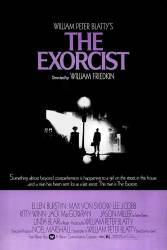
Question: What is Chris McNeal's assistant listening to on the radio when Father Merrit arrives?
Answer: When it cuts to Chris MacNeil's PA, Sharon, listening to the radio it's only for about 20 seconds, and all we hear is a voice which presumably belongs to a random radio host or guest who is in the midst of offering motivational advice. This short scene serves to show Sharon's tension with what's going on in the house.

Question: How can Michael recognize Laurie as his younger sister since he wouldn't have seen her since she was only two years old?
Answer: There is a scene where Laurie dreams about meeting Michael as a young teen. It's unknown whether this is an actual memory of real events, but since nothing indicates otherwise, we could assume the he saw her at an older age when she looked closer to her 17-year-old self.
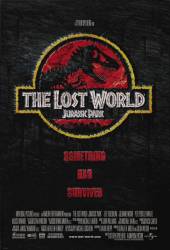
Question: Malcolm asks Roland why he'd kill a T-Rex. Roland proceeds to tell a story about a guy that went up a mountain and came back barely alive, and when asked 'did he go up there to die', responded 'no, he went up there to live'. I sort of get the point of the story, but could somebody clarify it for me?
Answer: It's basically about facing one's own mortality. Many humans feel that they 'feel the most alive' when facing (and overcoming) dangerous situations, the more challenging, the better. Roland is a big game hunter, to him, the ultimate challenge would be to hunt the biggest and (presumably) most dangerous predator ever to exist. Facing the danger of the T. Rex would make him feel better and mightier than he had ever felt in his life.
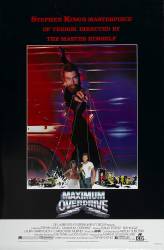
Question: One of the early posters of this film shows a bearded guy (who is not in the film) coming through a wall crack and holding puppet strings with one hand. Who is this guy supposed to be and what does he represent?
Chosen answer: He does bear a striking resemblance to Stephen King. King was both the writer and director of this movie, and as such, was certainly the guy in charge of all the character's fates and pulling all the strings.
Answer: It is Stephen King.
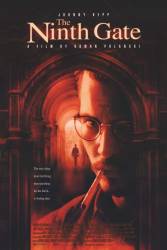
Question: Does "the girl" - as she's been called - have a name? And is she a (or the) devil?
Answer: She was not given a name, neither in the film nor credits. She is simply known as "The Girl". As to precisely who she is, it is deliberately left ambiguous. But the last engraving found by Corso does seem to indicate that she is the Whore of Babylon mentioned in the Book of Revelation.
Question: How did Carolyn get out of the cave and make it to the ship without being killed?
Answer: She had a jar of the light bugs that kept the creatures away.
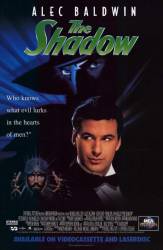
Question: When Lamont is struggling to stop the Phurba from cutting his throat, how did he finally manage to get control over the Phurba and use it to stab Khan?
Answer: Mind control over matter.
Answer: He had never gone up against someone like him. A man who not only knew how to harness his abilities, but had mastered them as well, like young Luke going up against Vader. He finally found the strength and the courage to fight and defeat him.
Question: When Norman says the guy "that wrote that book he loves" (Shumway?) congratulated him on Spencer's Theorem, then Claire says "He didn't know your father was dead?" and Norman says "He knew". What does one thing have to do with the other? I've seen this movie at least 20 times and I can't figure out this conversation.
Chosen answer: Spencer's theorem was Norman's father's theorem. Norman wants to be greater than his father was, so to be accidentally complemented on something that his father did would be bad enough. To say that the guy knows that his father is dead is to imply that the guy probably insulted him intentionally.
Question: What did Jezelle mean at the police station about the creeper saying "I think it's eaten too many hearts for its own to ever stop."
Answer: Since the Creeper needs various body parts i.e. eyes to see, lungs to breathe, it would also need to eat the hearts of its victims for its own heart to keep beating. Or she could mean that the Creeper is essentially devoid of all emotions as it keeps attacking anybody that has the body parts that it needs to extend its own life.
Question: When Damian learns that he is the Antichrist, he is very upset about it. Later in the movie, why does he choose to embrace who he is and his destiny?
Answer: Having lived as a "normal" boy, Damien is initially shocked to learn his true identity. After having time to adjust and being surrounded and groomed by satanic supporters, he eventually embraces his true persona.
The answer is correct, and I'm just going a into a bit more detail. During the events of the first film, Damien is normal until Mrs Baylock entered his life. She started teaching him about who he was, but he was only five or six, which would have been far too young for him to understand. He started acting more malicious after this point. After the movie ended, it skips ahead to Damien living with his uncle, aunt, and cousin. During that time, it's conceivable that the forces surrounding him decided to give him a period of peace. He was raised by his aunt (secretly a Satanist), but she might have been instructed to give him a normal upbringing so he wouldn't call attention to himself. As a result, he probably forgot about it, and started to believe he wasn't any different. Once he learned of his unholy lineage he began to remember and eventually embrace it, especially since he had several followers (Buher, Neff, and many others he may not have met yet) to help and protect him.
Question: I'm confused by the ending. Did Helen herself become just like Candyman, was it really Candyman using Helen's body, or did Helen simply decide to make a brief return from the dead to make her husband pay for his betrayal?
Chosen answer: It's a bit ambiguous, but just as Candyman became a tortured soul who suffered a painful and unjust death, to too did Helen.

Question: When Elliot Spenser is being transformed into Pinhead, who was cutting lines into his face and head and driving nails into him?
Answer: All we can see (in abstract closeup) is serpent-like tendrils cutting him and driving the pins into his head. As someone else said, it's likely another cenobite, although alternately it could also be the same "contraption" that turns Channard into a cenobite late in the film, given the tendrils are similar to the ones he sprouts.
Answer: Presumably another cenobite/cenobites. The choice not to show them makes for a better scene, as that moment is all about him, becoming the iconic Pinhead; the cenobites who made him that way are of no consequence to the story, and their own grotesque appearance would have distracted from his transformation.

Question: Is the reanimation of dead people the purpose of the virus, or an unforeseen side effect? If it's a side effect, what was the original purpose of the T-Virus?
Answer: Actually the T-Virus was originally meant as a cure for a genetic disorder that Dr. Ashford and James Marcus daughters suffered from. The reanimation was a side effect and James Marcus was killed by Dr. Alexander Isaacs so he could take control of it and turn it into a bio-weapon.
Answer: The original virus was a "Fountain of Youth" type of thing. Reviving dead cells so the host would stay young. It was so powerful that it reanimated the dead.
Answer: Wait, wasn't the original virus meant to control the scientists daughters genetic disease, not an eternal life serum.
Question: Do the sewers of New York really fill up with toxic waste every night as stated in the movie, or was this just for the purpose of the plot?

Question: For the original, the sequel and the remake, what materials did the crew use to create the blob and how did they get it to move?
Answer: In both the the 50's original and 70s sequel, the majority of the Blob effects were created using a thick silicone gel colored with red vegetable dye; its movement was essentially controlled by gravity, just letting the goop run downhill and angling the camera to provide the illusion that it was moving horizontally, vertically, or straight at the audience. The original film also employed a large barrage balloon (or weather balloon) covered in the colored silicone goop for shots where people are actually consumed by the Blob. The 1972 sequel additionally used a preposterous rotating spit covered in red plastic, mounted in front of the camera, to provide the Blob's point-of-view as it steamrolled toward its victims. The 1988 remake used much more sophisticated practical effects such as robotics, latex prosthetics, pneumatic tentacles, et cetera, which were directly inspired by John Carpenter's 1982 special-effects-heavy horror flick, "The Thing." For the last couple of decades, there has also been talk of a major CGI reboot of "The Blob," but it has yet to materialize.
Question: Why wasn't Dale arrested after he hit the officer's sister and beat up two other people?
Chosen answer: If she arrested Dale, her sister (Dale's gf) would be upset. But mostly, it's a small town where they all know each other, and that's just how things work.
Answer: Plus The sister would have denied it. She said she fell down and just like Kurt added it's a small town plus he already had people on his side when he jumped on the family at the dinner. Plus his girlfriend jumped in mom face because Dale was mad at husband.
Question: I noticed on Andy's final moments video on the DVD, the month on the camera goes from May(When he explains the Hollywood Squares game.) To June when he finally turns to a zombie. Was the movie supposed to take place in a month or is that just a simple mistake?
Answer: Yes, part of the point of Andy's video is to give the viewer the timespan of the film.
Answer: Besides being in "Father's Day", it showed up in "The Lonesome Death Of Jordy Verrill" right next to the cash box at the Department of Meteors. In "Something To Tide You Over" on the nightstand next to Richard's bed. In "The Crate", it was on the writing desk when Henry writes the letter to Wilma. In "They're Creeping Up On You", Upson Pratt uses it as a soap dish. And in the epilogue, it appears on Billy's desk when he starts stabbing the voodoo doll.