

Question: I'm not sure about this, but didn't Grim's tires get blown out? If so, right after the next scene, where 14K hits Grim's car, the tires appear intact. It also looked new despite getting blown by a missile.

Question: After Rex finds out the key to the Judge is missing, he goes back home on a motorbike. He pulls up the garage door and finds the Judge is not there. He snaps and begins to punch, kick and swear. Breaks down the door, has stuff sprawled out all over the ground, and smokes a cigarette. In both versions of the movie including the deleted scenes, it never shows how Rex was able to find Ian at the motel. How was Rex able to find Ian at a motel in Knoxville, Tennessee?
Answer: LoJack.
Question: Was this the first PG-13 film to use the F word? If not, what movie was the first?
Answer: Hardly. The word "fuck" has been allowed, subject to certain conditions, in PG-13-rated films ever since the rating was introduced in July 1984. Prior to that (and even occasionally afterwards), it was not unheard of for a film rated as low as PG to get away with using the word, with the first use in a PG-rated film being in All The President's Men in 1976.
Question: At the very end of the film when Angie is dragged, in the background it doesn't look like any figure dragged her? Shouldn't we have seen at least the upper body of a figure grabbing and dragging her? It looks like she was dragged a long way, so why isn't there any evidence of her being dragged by any human figure?
Answer: Purely done for suspense reasons. Seeing the figure of something walking up behind her, grabbing her and dragging her away would have less of a "jump" factor than what happened in the movie, which is her being suddenly dragged away into the darkness.
Question: Exactly what happened at the end? I didn't get it. She stabbed herself and then commits her dad. What did it mean?
Answer: Molly attempts to commit suicide to avoid having to join the Devil. Unfortunately for her, the clock strikes midnight before she can kill herself, and thus, having reached her 18th birthday, her soul now belongs to the Devil, who preserves her life. Molly, now one of the Devil's minions, has her father committed to the asylum, presumably having framed her father for her self-inflicted injuries, leaving her free to continue her life working for her new master.
Question: This gets described as a reboot rather than a sequel, but why? Nothing directly contradicts the original, as far as I'm aware, the only real change is the title character being recast - hardly unusual for a franchise.
Chosen answer: I haven't seen this movie in several years, but one contradiction I distinctly remember is the Punisher having a deceased daughter in this film, whereas in the 2004 film, he only had a son. The 2004 film had the Punisher's wife and son (named Will here) murdered in Puerto Rico and buried and Tampa. This film takes place in New York, and the cemetery the Punisher goes to has a gravestone for his wife, daughter and son (named Frank, Jr. here). There is also a brief flashback in this scene of the Punisher sitting on a picnic blanket with his dead family around him, which is closer to the comics origin where his family were collateral damage in a gang crossfire. The 2004 film depicted his family as being the deliberate targets of a mob hit and were run over by a truck on a pier.

Question: I don't fully understand how Ryugi dies. He simply runs away after the gun ejects itself and is impaled by about a half-dozen rods. What happened and where did the rods come from? Are they the gun-barrels?
Answer: I will have to answer my question after another viewing of the film. The gun is shattered by the "special" bullets that Miki gave to Ami, which were too powerful, causing the gun to fragment when it was yanked off her arm. The gun barrels fall of and impale Ryugi.

Question: When Tuvia executed Arkady for his defiant mutiny, why did Tuvia have to turn his body to pull his weapon, instead of just drawing his gun and shooting him dead on the spot right there?
Answer: For two reasons: one, to let him think Tuvia was going and let down Arkady's defenses; and second, Tuvia was quickly and truly debating whether or not to shoot.

Question: When Michael & Hannah begin their affair Michael is 15 years old - in the courtroom scenes, the judge states that Hannah is now 43 years old and also states that the events at Auschwitz took place 20 years prior, which would've made her 23 at the time of Auschwitz and possibly around 23 when she left Michael - meaning that when they had the affair she was only about 7 years his senior. Therefore, when she's 43 in court, that makes him 36 years old when he's at university watching the court proceedings - but surely that's too old for what the film is trying to portray? It seems like he's in his 20's when he's at uni. I don't get it. Surely they couldn't have gotten their timelines so incorrect?
Answer: It is confusing in the movie because it seems like she went from the ticket taking job to the SS job after refusing the office job promotion, which would require literacy. When actually her SS job was prior to the ticket taker job. Was muddled in the movie.
Chosen answer: Where do you figure she was 23 when she left Michael? She had been working at the dispatch office for several years before she meet Michael (as indicated in the scene where her boss promotes her for her long service) -- so this is years after she was at Auschwitz. So she was in her mid-30s when she began the one-year affair with 15-year-old Michael. Then, while at university about 8 years later (when she is in her early 40s), he attends her trial. The timeline is fine.

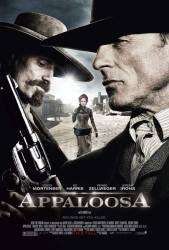
Question: In the scene where they cross the bridge with the train, and Allison French is being held by those two guys with a rope around her neck, so that if they would shoot the guys, the horse would run off and break her neck, suffocate her or whatever... They were with 4 against 2, so why didn't one of 'em just shoot that horse?
Answer: There's no explanation. It could be that no one thought of this. Also, even if they shot the horse, the girl could still be injured or killed. If the horse was only wounded, it could have bolted, reared up, or fallen and then rolled on top of the girl. There's many different scenarios that could have played out.

Question: At the beginning of the film we're told that four people came back from the rescue mission, three wrote books and two had their books published. Later on we find out Four Leafs made the whole thing up. So how do the other three survivors fit into the whole thing, did they just make it up too? Or was the opening statement just meant as a joke all-together?
Answer: There were 3 other survivors. Only they presumably told the truth. Since Four Leafs made up his version, his more than likely seemed more entertaining. So his book was chosen to be made into a movie.


Question: When the Duke says that he "cannot" ask Lady Bess to leave his home (after the Duchess discovers their affair), does he simply not want to or is there some reason that he feels he cannot?

Question: Are the events in this movie going to be considered canon for the time between Episodes II and III, or will the events in the Clone Wars TV show be considered canon, or both (if the events in the movie possibly take place after those in the show)?
Answer: Canon in the Star Wars universe is a somewhat complex term as it has several levels ordered in a hierarchy of precedence. Facts stated at a certain level are considered as canon, unless contradicted by something at a higher level of canonicity. The uppermost level of canonicity are the six live-action films. Lucas has stated that the television episodes (which include the Clone Wars movie, which can be considered as the first episodes of the TV series) are to be considered as the next level down in canonicity, so below the films, but above any other releases (books, comics and so forth). So, basically, yes, they're to be considered canon, except in any case where they contradict something established in the live-action films.
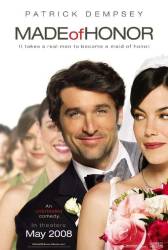
Question: I am a pianist, and have played Debussy, Arabesque no.1, so often. I have seen the movie "Made of Honor" three times, and every time failed to locate the Arabesque in the soundtrack. It is mentioned in the credits. Please tell me at which time in the movie it plays.
Answer: When Michelle and Tom meet up with the three bridesmaids at the hotel, while they're seated at the table we hear the Arabesque No. 1 performed on the harp as faint background music. (Approx. 00:34:05).



Question: Why are the prisoners not allowed to talk to each other in Guantanamo bay? Is it to keep them from planning escapes?
Answer: The Guantanamo prisoners are all perceived terrorists, presumably working in coordination. It's essential that they not communicate with each other, so as to prevent them from leaking info about U.S. security.
I think it's also to prevent the prisoners from planning attacks on the guards.
How would they leak information about U.S. security? Most people in the Middle East have no knowledge about U.S. security.
Because people are occasionally released, and whether terrorists or not, may have information others would find valuable - about what goes on in Guantanamo Bay, if nothing else.
Answer: I guess it is more likely to be for the isolation feeling of not talking to anyone. It is like deprivation sleeping, some kind of psychological thing.
Answer: So they'd be unable to water their cattle. Which has two benefits for Fletcher. The first being that they'd have to take their cattle to the watering hole on the border of their property, making it easier for Fletcher to steal the cows. Second, and more long term, their cattle would be of poorer quality due to lack of proper care. The ranch would lose money as a result, and they'd be more amenable to selling the ranch to their competition, whom Fletcher works for.
Phixius ★