
Question: In the sniper scene, the terrorists quickly took out one of the mercenaries on the Barrett. However, when Sergeant Sanborn took the same position, the opposing sides didn't even take a shot and hardly retaliated. Is there any reason why this is so? Including the guys on the roof, the guy to the far right, and the guys in the window not trying to move positions either.
Question: Everything that happens in the bedtime stories and then occurs to Skeeter in real life has a (pretty much) rational explanation (e.g. the rain of gumballs, "Abe Lincoln" actually being a penny), but why on earth do the women in the restaurant jump up and start doing the hokey pokey, apparently against their will?
Answer: The only reason for them to do the hokey pokey is because it's possible. Patrick said that they would do it in the story, and even in the story it's not impossible. Patrick made it happen.


Question: When Caleb is in the house rescuing a young girl, would it really have made sense for Caleb to take off his mask, and put it on the child he is rescuing? I mean the child was unconscious, and he would still need oxygen. It's really hard to breathe in buildings. I would like an actual firefighter to answer this question.
Answer: As a Firefighter, in a fire your own life and safety are your top priority. You can't save anybody if you become a casualty. And you never take your mask off. We are trained to work in all our gear, it all stays on until we come out.
Answer: I'm not a Firefighter but I believe that the masks are uncomfortable and he took it off so he can work faster. It only makes since to give the mask to the unconscious girl because it might help her breathe better or start to breathe again. He is trained to do these types of things.
Caleb would have a pretty hard time breathing by taking his the oxygen mask off.
Question: When Abe or the Princess are in the library, (but I can't remember if they are together) what is the name/author of the poem they are reading?
Answer: "In Memoriam" by Alfred Lord Tennyson.
Question: Why did the nuke fridge scene cause so much controversy?
Answer: People felt it was ridiculous and cartoonish, even by Indiana Jones standards. Even if it was possible to survive a nuclear blast via the lead lining of a fridge (it's not), or that the fridge would simply be thrown away rather than be melted/torn apart like everything else in the vicinity (it wouldn't), the impact of being flung what appears to be a mile or so through the air, then violently crashing into and rolling over the ground, would certainly kill anything inside. The controversy arose because usually, in "classic" Indy films, the fantastical elements were exactly that: fantastic, magical, and/or supernatural. This was presented as taking place in our reality, with no "power of God" or magic spells, and for many, that was just too much disbelief to suspend.
Answer: Another problem is that people couldn't articulate what they didn't like about the film, and point to the "Nuke the Fridge" scene as a quick example of what they think is bad about it. In the realm of Indy, it's really no more outlandish than jumping out of a plane in an inflatable raft like in Temple of Doom.
It's considerably more outlandish. The raft scene was recreated/reviewed by Mythbusters, and they found that the raft floated down at a mere 22 mph. It would be hard/impossible in real life to stay on the raft, sure, but if you buy that bit of movie cheekiness, it would definitely slow their descent enough to survive, especially since they land a) on a slope and b) on soft snow. The fridge scene, however, has no such saving grace... it's completely ridiculous and unrealistic in every detail.



Question: What was the purpose of visiting Vesper's boyfriend at the end of the movie? Was he involved? Because I don't remember anyone saying anything about that in the movie.
Answer: He's an operative of the Quantum organisation that Bond is up against who specialises in seducing women who can then be manipulated into helping their cause - in Vesper's case by pretending to be kidnapped to force her to cooperate. When Bond catches up with him, he's in the process of seducing another woman, no doubt to involve her in some scheme or other. Bond tells her the truth and she leaves, leaving Bond to deal with the Quantum agent.

Question: At the end of the movie the town clock that was removed from the train station is shown stored in a basement just as the basement floods. The clock is seen to still be working, but how, given that there was no one there to wind it? As the clock was made during the first world war it would be mechanical, not battery powered.
Answer: It is symbolic, showing that time never stops. Everyone will be swept up by the tsunami eventually. No force of nature can compare to time itself. Nothing at all.

Question: I am very curious as to how Ben, i.e. Tim, is able to donate his heart to Emily, who had a very rare blood type. I just find it unusual that Tim would have the same blood type as Emily. Also, how would Tim have known Emily's blood type?
Answer: In the course of the film it's revealed that Ben has done extensive homework and taken drastic steps to find the right person, i.e. a "righteous good person" to give them what he has left to offer. Therefore, he would have to find someone with his own rare blood type AND needed a heart...which he eventually did.

Question: What would have eventually happened to Marko after Bryan left him in the basement? Would he just have died and continued to have current surge through him till someone found him? Would he eventually burst in to flames? Would his heart explode? I know he dies, that much is obvious. Just curious as to what happens in the longer term.
Chosen answer: Depends on how much current is actually running through him. Since it didn't kill him right away, even after a few jolts to get him to talk, it's unlikely it was enough that he would ever burst into flames or that his heart would explode. Most likely, he just slowly cooked until he dried up and burnt like a turkey left too long in the oven.

Question: What game is Griffin playing when David goes to his 'lair' the second time? Just before David teleports there, Griffin is talking to a dead Paladin's body about the game he's playing and new moves. And then David sits in front of the TV to get his attention. You can't see the screen, but you can hear the game and it sounds like something that would be distinctive. What game is it?

Question: Why does Salim sit in a bathtub surrounded by rupee notes of various denominations before shooting at the mob boss and getting shot in return?
Answer: People have said that it may possibly be a metaphor in that the rupees he is surrounded by is actually "blood money" that the mob bosses had amounted, and he was intent on staining the notes with his own blood. But there is no correct answer to this - it's something that you need to interpret for yourself.

Question: Was Mrs. Collins' son ever found?
Answer: No. He was murdered at age nine. The movie uses creative license to bring up the suspicion that he could have somehow survived to create a dramatic hope in the end. Moreover, the killer was very unstable and retracted his testimony more than once. There is no solid proof of the boy surviving the killings. The police even found partial evidence of Walter Collins at the burial site. See the Wikipedia article for more information.
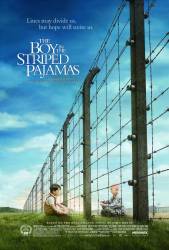
Question: Why wouldn't Shmuel escape? It would've been very easy. He could've done it the same way he let Bruno in.
Answer: Samuel knew the dangers of the camp and knew that trying to escape would result in death. He knows Bruno is likely to be allowed IN to the camp as he is a German and Germans are running the camp. Plus, if Shmuel did escape, where would he go? He's 8, on his own and alone in the woods.

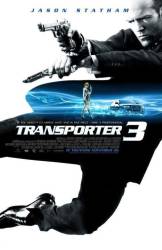
Question: Does anyone by any chance recognize the make and model of that cool black wristwatch the main villain, Johnson, is wearing?
Chosen answer: The film credits Hamilton Watches. Since Jason Statham uses a Officine Panerai Watch, I think, the villain uses a Hamilton. It's a nice watch, but I can't find that model on Hamilton's web site.

Answer: The problem for the sniper was once he'd taken his shot, he was now pretty exposed. He didn't have a lot of cover and it wouldn't have taken the Americans long to figure out where the shot came from, hence why the enemy snipers made no attempt to move.
GalahadFairlight