
Question: How could Auto act against his directive? He's playing the top-secret order he got (never to come back to Earth) in front of the captain, yet isn't able to act against it again because things might have changed in the 700 years since the order was received. And in the face of the new evidence (the plant), doesn't that contradict the order?
Answer: One of the key points of the movie is that programming can evolve - WALL-E being the most obvious case in point. After all this time, Auto's entitled to be somewhat erratic in how he deals with things. Besides, he's still very firm on his primary directive, to prevent the return to humanity to Earth - keeping the existence of that directive a secret is rather less critical. As for the plant, that does very little to invalidate the directive. It may show that the principles underlying that directive are flawed, but Auto's not got the leeway to deal with that. The directive still stands.

Question: In the real world when it's day wouldn't the people of Ember notice because, if the kids could see the city, I'm pretty sure they could see the sky.
Question: How is it that there are winter fairies at the talent choosing ceremony in the first movie, Tinkerbell (2008) when in the fourth movie they state that winter fairies cannot fly in the warm areas?
Answer: I guess the writers hadn't quite figured out the whole universe of the fairies when they made the Tinkerbell movie. Seems easy enough to edit out the fairy placing the snowflake and when Clank and Bobble fly through winter with her. I agree it is a glaring error, and they should fix it.

Question: Why did the nuke fridge scene cause so much controversy?
Answer: People felt it was ridiculous and cartoonish, even by Indiana Jones standards. Even if it was possible to survive a nuclear blast via the lead lining of a fridge (it's not), or that the fridge would simply be thrown away rather than be melted/torn apart like everything else in the vicinity (it wouldn't), the impact of being flung what appears to be a mile or so through the air, then violently crashing into and rolling over the ground, would certainly kill anything inside. The controversy arose because usually, in "classic" Indy films, the fantastical elements were exactly that: fantastic, magical, and/or supernatural. This was presented as taking place in our reality, with no "power of God" or magic spells, and for many, that was just too much disbelief to suspend.
Answer: Another problem is that people couldn't articulate what they didn't like about the film, and point to the "Nuke the Fridge" scene as a quick example of what they think is bad about it. In the realm of Indy, it's really no more outlandish than jumping out of a plane in an inflatable raft like in Temple of Doom.
It's considerably more outlandish. The raft scene was recreated/reviewed by Mythbusters, and they found that the raft floated down at a mere 22 mph. It would be hard/impossible in real life to stay on the raft, sure, but if you buy that bit of movie cheekiness, it would definitely slow their descent enough to survive, especially since they land a) on a slope and b) on soft snow. The fridge scene, however, has no such saving grace... it's completely ridiculous and unrealistic in every detail.
Question: When Abe or the Princess are in the library, (but I can't remember if they are together) what is the name/author of the poem they are reading?
Answer: "In Memoriam" by Alfred Lord Tennyson.
Question: What was the purpose of visiting Vesper's boyfriend at the end of the movie? Was he involved? Because I don't remember anyone saying anything about that in the movie.
Answer: He's an operative of the Quantum organisation that Bond is up against who specialises in seducing women who can then be manipulated into helping their cause - in Vesper's case by pretending to be kidnapped to force her to cooperate. When Bond catches up with him, he's in the process of seducing another woman, no doubt to involve her in some scheme or other. Bond tells her the truth and she leaves, leaving Bond to deal with the Quantum agent.

Question: What game is Griffin playing when David goes to his 'lair' the second time? Just before David teleports there, Griffin is talking to a dead Paladin's body about the game he's playing and new moves. And then David sits in front of the TV to get his attention. You can't see the screen, but you can hear the game and it sounds like something that would be distinctive. What game is it?

Question: Does anyone by any chance recognize the make and model of that cool black wristwatch the main villain, Johnson, is wearing?
Chosen answer: The film credits Hamilton Watches. Since Jason Statham uses a Officine Panerai Watch, I think, the villain uses a Hamilton. It's a nice watch, but I can't find that model on Hamilton's web site.
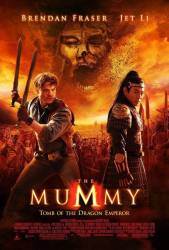
Question: Why didn't Rachel Weisz reprise her role as Evelyn in the third film?
Answer: Although she initially expressed an interest in returning, she reportedly disliked the script and ultimately chose not to reappear. While the producers initially considered writing the character out, with the story rationale that she had been killed in an air-raid on London during World War Two, it was ultimately decided that this would require too much rewriting and thus the character was recast.
Answer: I read the reason she didn't want to do it was she had just given birth to her first child and didn't want to leave and do location shooting.

Question: Is Gerard Butler playing two roles a reference to "Peter Pan," in which the same actor usually plays both Mr. Darling and Captain Hook?
Chosen answer: No. Gerard Butler plays Alex Rover because Nim imagines him looking like her father. Alexandra Rover sees him like that merely for the sake of consistency within the film.

Question: Why did Fletcher stop up the water pump at Faraway Downs?
Answer: So they'd be unable to water their cattle. Which has two benefits for Fletcher. The first being that they'd have to take their cattle to the watering hole on the border of their property, making it easier for Fletcher to steal the cows. Second, and more long term, their cattle would be of poorer quality due to lack of proper care. The ranch would lose money as a result, and they'd be more amenable to selling the ranch to their competition, whom Fletcher works for.
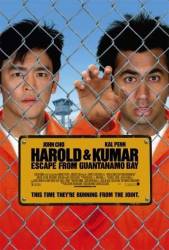
Question: Why are the prisoners not allowed to talk to each other in Guantanamo bay? Is it to keep them from planning escapes?
Answer: The Guantanamo prisoners are all perceived terrorists, presumably working in coordination. It's essential that they not communicate with each other, so as to prevent them from leaking info about U.S. security.
I think it's also to prevent the prisoners from planning attacks on the guards.
How would they leak information about U.S. security? Most people in the Middle East have no knowledge about U.S. security.
Because people are occasionally released, and whether terrorists or not, may have information others would find valuable - about what goes on in Guantanamo Bay, if nothing else.
Answer: I guess it is more likely to be for the isolation feeling of not talking to anyone. It is like deprivation sleeping, some kind of psychological thing.

Question: Are the events in this movie going to be considered canon for the time between Episodes II and III, or will the events in the Clone Wars TV show be considered canon, or both (if the events in the movie possibly take place after those in the show)?
Answer: Canon in the Star Wars universe is a somewhat complex term as it has several levels ordered in a hierarchy of precedence. Facts stated at a certain level are considered as canon, unless contradicted by something at a higher level of canonicity. The uppermost level of canonicity are the six live-action films. Lucas has stated that the television episodes (which include the Clone Wars movie, which can be considered as the first episodes of the TV series) are to be considered as the next level down in canonicity, so below the films, but above any other releases (books, comics and so forth). So, basically, yes, they're to be considered canon, except in any case where they contradict something established in the live-action films.

Answer: Iron Man by Black Sabbath (minus the lyrics).
Rydersriot87