Question: At the very end when they show the sun setting over the hill, you can see something/someone moving across the screen, just under the ground. Is this done to symbolize something, or was it a sort of camera problem?
Question: Sally tries to prevent Jack from taking over Christmas using Fog Juice. How will fog stop him?
Answer: As seen in the movie, the Fog Juice made it difficult to see anything. Sally had hoped that with no way of seeing where he was going, she would be able to stop him from leaving Halloween Town and save his life.
Answer: Well, it won't. The fog only covered the ground. Because once Jack flew off in his sleigh, he could see. So, it didn't really stop him. He just had to fly above it, and boom! He could see.
Question: When they are singing under a tree full of doves, it looks like they were tied to the tree branches. Is this true?
Answer: Yes it is true. They did this to prevent the birds from flying into the backdrops and becoming injured or killed.
Question: At the end of the "We Are One" song, Simba and Kiara have returned to pride rock around sunset. Fine, fine, but the thing that's been bugging me for years is: Kiara stares intently at something, causing Simba to frown and look up to see what she sees. He seems to chuckle, then turns back to her. What is it that they were looking at before he says "You'll understand some day" and why is it there?
Answer: Kiara is staring at the tip of Pride Rock and thinking of the that she will be a leader one day, due to the fact that shown in the first movie that this is where the new kings/queens roar to show that they are the new rulers. Simba notices her looking and chuckles at the irony of him having wanting to be leader so badly at her age and Kiara not wanting to be a leader at all.
Question: I once heard that there's a shell somewhere in the movie that has a profanity written on it. Is this true?
Answer: Yet another Disney urban legend.
Question: Why was Toulouse crying at the end of the Elephant Love Medley? If I am correct he was sitting on a balcony eating and drinking when singing the words "How wonderful life is, now you're in the world." Is it just that he is happy about his dream of finally getting the Bohemian Play? Is it a potential that he is in love with Christian or Satine. Another possibility is that he just happy seeing Christian in love, since Christian previously stated that he had never been in love before?
Answer: The way I saw it, that was Toulouse in present day singing, after the death of Satine etc.
He's a funny little man who is lonely himself. All he has is his bottle when everything is all said and done. He has nobody.
Answer: Maybe it's sort of a foreshadowing.
Question: One of my co-workers said the first line in the show was, "Michael Renee was sick the day the Earth stood still". Could you give me the exact first line and what it means?
Answer: The first line to the lyrics of 'Science Fiction/Double Feature' is "Michael Rennie was ill The Day the Earth Stood Still, but he told us where we stand." That line is a reference to the 1951 film classic 'The Day the Earth Stood Still', which stars Michael Rennie as Klaatu, the alien from outer-space, who is shot at the start of the film when he tries to convey a dire message of goodwill to the humans. The rest of the song lyrics refer to other science fiction films including 'The Invisible Man' starring Claude Rains, 'King Kong' starring Fay Wray, and 'Tarantula' starring Leo G. Carroll.
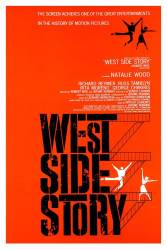
Question: Why did they use actors who couldn't sing in the leading roles? Wouldn't it be easier to cast people who could sing instead of dubbing with other singing voices?
Answer: People would not come to the theater to see Marnie Nixon despite the fact that she has sung the lead roles in West Side Story, The King and I, and My Fair Lady. They'd rather see that darling girl from "Miracle on 34th Street" again (or Deborah Kerr or Audrey Hepburn) than an unknown with actual talent.
Answer: Natalie Wood was more well-known. And Wood actually COULD sing, she just couldn't hit the high notes perfectly. In fact, she was told only some of her singing would be dubbed.
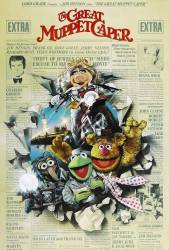
Question: How in the world were Nicky and the models able to slip past the guard dogs?
Answer: As shown in Nicky's office, him and the models are professionals, judging from the different tools that they are using and a map of the Mallory Gallery. All they would have to do is watch and wait for the dogs to leave a specific area, and they would be able to get in because of how quiet they were while Kermit and friends were caught because of how much noise Animal made while trying to eat through the bars.
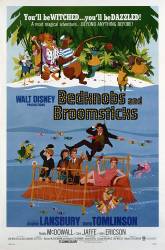
Question: Several times near the end of the movie, the German soldiers speak in German without subtitles. Can anyone translate?
Answer: All I could catch was "VORAN,VORAN" which means "Go, go!"
Answer: I added some translations for this to the Trivia page for this movie here on moviemistakes.com a while back. https://www.moviemistakes.com/entry213396.
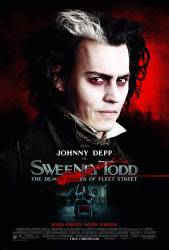
Question: In Mrs. Lovett's song "By the Sea," near the end she sings "Bring along your chopper!" What is the word "chopper" supposed to mean? Sweeney can bring his what?
Answer: His knife/razor/sharp edge to kill someone with.
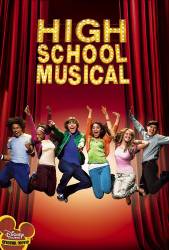
Question: In 'Breaking Free' Troy doesn't look at Gabriella until a few seconds after what should have been the start of the first line. Does this mean that Gabriella should have started the song, but Troy encouraged her by starting the song?
Answer: I'm not positive, but that is what I've always assumed.

Question: Yukon has a gun - why he didn't just shoot the snow creature at the cave?
Answer: It's a kid's show, not Game of Thrones.
Answer: Plot wise, if the snow creature had been killed, it would have ruined the happy ending. Yukon has a kind nature, and he probably wouldn't kill anything.
I'm not sure about that. He lured the snow monster to the water and watched it sink without knowing for sure it would resurface, then later to the edge of a cliff where he, along with his dog team, pushed the creature off. Yes, he said, "bumbles bounce," but it was still a violent act.
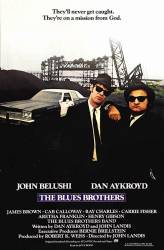
Question: Did John Belushi do all the dancing, especially the turnovers in church, by himself or was it a double?
Answer: It was a double, and the "making of" documentary on the DVD shows this.
To be fair, John did do a lot of flips and dancing as Jake; just not all of them in the movie.
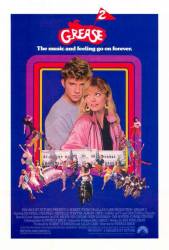
Question: On the soundtrack Dimucci sings the song "Do it for our Country" as a solo number. In the film it's a duet with Sharon. Does anyone know why they changed it in the film, or let Peter Frechette sing it alone on the soundtrack?
Answer: "Do It For Our Country" is a duet between Sharon and Louis. Maureen Teefy couldn't make it to the recording session, so Peter Frechette had to sing the whole song himself, which is why Maureen's vocals aren't on the movie's soundtrack. In some recordings her voice was dubbed in later.
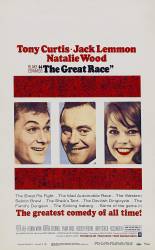
Question: How exactly did Leslie initially intend on crossing the Bering or Chukchi Sea from Alaska into Russia? I know he and Professor Fate end up floating on a large mass of ice to do so, but that's not exactly something you can plan for.
Chosen answer: The cars and drivers were supposed to make the trip by ship from North America across the Bering Strait to a Russian port, where they would resume the race. As it happened, Leslie and Fate were stranded in a blizzard on the North American side before they reached the ship. The ice beneath their cars unexpectedly broke away and drifted across the Bering Strait, improbably arriving at the intended destination port in Russia. As they drift into port, we see Leslie's right-hand man, Hezekiah, waving at them from the Russian dock, which is only possible if Hezekiah made the journey by the very ship that Leslie and Fate missed.
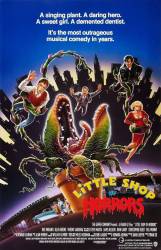
Question: Near the end of the song "I am a dentist", is Orin saying "and a success" or "and I say sit"?
Answer: He says "and a success". He's singing about his mother telling him he'd become a successful dentist.
Answer: According to Ted Neeley and Norman Jewison on the DVD commentary, the shepherd walking across the frame in the final shot of the film was never intended to be there, and just happened across the shot as they were filming. Because of the significance of a shepherd in the teachings of Christ, Jewison and the crew were struck profoundly by the timing of this shepherd crossing the field, and kept the shot. They got a perfect sunset, as well as a subtle depiction of the resurrection.