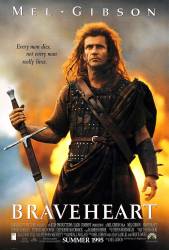
Question: Why does Wallace spit out the pain killer that the princess gives him?
Answer: Because it's a reference to what his Father's last words to him were at the beginning of the film before he was killed, 'I know you can fight but it's our wits that makes us men'. That's why Wallace says to the Princess, 'It will dull my wits and I must have them always'.
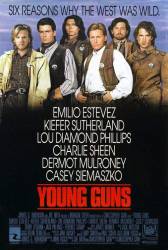
Question: Chavez calls Billy "Chivato". What does this mean?
Answer: Chivato in northern Mexico chihuahua area a Chivato is a male kid goat but also can be used as a young person full of energy, also an endearing term for a young boy. Lincoln Country is 2.5 hours from El paso TX and Chihuahua Juarez to be exact where many a cowboy spent their pay so the term would have the same meaning in Lincoln Ruidoso, Capitán where I grew up.
Answer: According to Lou Dimond Phillips himself in a tweet in response to the word, he said "'Chivato.' I'm told it means little kid, as in goats and as in Billy the Kid."
Answer: Chavez means Chivato as a young man not a traitor as some speculate.
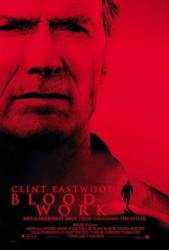
Question: I missed something. What was it that Clint Eastwood noticed that made him realize his friend was the killer?
Chosen answer: When looking for clues to the identity of the killer, he comes across a code with the numbers, 903 472 568. He quickly realizes that Noone is the killer because in the code there is "No one".
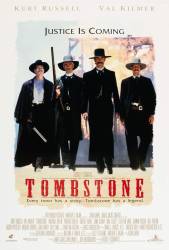
Question: What did Doc mean when he said "It's not revenge he's after. It's the reckoning"?
Chosen answer: A reckoning is like a judgment day, exacting retribution for one's actions. Doc was very well educated and had a very large vocabulary. He was correctly pointing out the subtle difference between revenge (to make Wyatt feel better about losing Morgan and about Virgil's crippling injury) and the fact that Wyatt was bringing about a judgment day (or reckoning) for each of the men who hurt his family.
Answer: I've spent a lot of time thinking about this very question, and here's what I've come up with. I think there are at least two differences between revenge and a reckoning. First, I think it has to do with the scale of the response to an offending action. Revenge, in my mind, is an eye for an eye, i.e, "You killed my brother and wounded another, so I will inflict the same action on your family (or group, gang, whatever). " A reckoning is less a measured response to an offending action and more of a full-scale punishment, i.e, "You killed my brother and wounded another, so I will now slaughter your entire family-including those who were not directly responsible for the offending action." Second, I think there is also a difference in motivation. Revenge tends to be a very personal response to something, whereas a reckoning tends to be more of a response fueled by a need for justice. In Wyatt's case, it was both. He was enraged by what happened to his family, but was also a lawman.
Thank you for this response! I've only seen Tombstone a million times and asked the same question every time. It's hard to separate the difference between the two but I believe you nailed it. Well done.
I'm thinking the opposite in terms. Revenge is "Reflexive" and is generally any means necessary (out of an abundance of pain or rage) to hurt the other party. "Revenge is a dish best served cold." If one is exacting justice there's no need to be cold hearted. Therefore, Reckoning is (to me) a fair balancing of the "scales" hence "an eye for an eye." Not only consequences of actions as it were but a corrective action to an incorrect circumstance. Just my understanding.
The problem with that theory is there is no difference in the end because the end result was the same...the killing. True reckoning could have only been achieved though the apprehension and punishment by trial and jury, anything other than that is simply revenge.

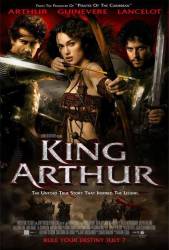
Question: What does the Saxon who rallies the troops actually yell? He yells it twice: once, after Cerdic meets with Arthur in front of the wall and gives the order to "prepare the men for battle", and then a second time when Cerdic gives the signal after the only survivor of the first "wave" comes back through the wall. (And I don't mean his cry of "battle formation.").
Answer: I don't think it's supposed to be German. Probably Old Saxon. Could be something like "slahten fiand" - slaughter enemy.
Answer: He yells 'Schlachtet den feind!' (In very, very bad "German") - 'slaughter the enemy!'. And his army seems to yell: "Schlachtung! Schlachtung! Schlachtung..." - "Slaughter! Slaughter! Slaughter..."

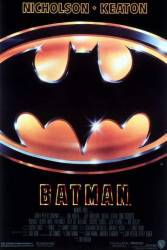
Question: When Joker goes to Vicky's apartment, how did he know where she lived?
Answer: He could have looked up her address in the phone book. Just before Bruce arrives at Vikki's apartment, Joker asks Bob the Goon for - a phone book. Also he could have been tailing Bruce and found her apartment that way, after all he does show up not long after Bruce does.
Chosen answer: She's a semi-famous reporter/photographer. It would be fairly easy (especially for a criminal) to find her home.
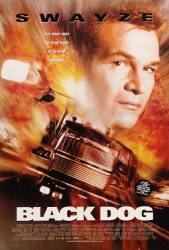
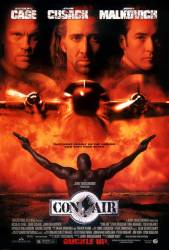
Question: What is the actual likelihood that a decorated serviceman, with no prior criminal record (we know this because if Poe had any priors he wouldn't have been in the Army) would actually get prison time for killing two men who attacked himself and his girlfriend? Seeing as there were witnesses (said girlfriend and bartender) I find it hard to believe he would have gotten more than an extended period of probation. A prison term, even a year or two, seems severely harsh considering the circumstances.
Chosen answer: Zero. As you said, he was attacked and there are witnesses that he tried to avoid the fight and the killings were in self-defense. It is an extremely weak plot hammer to get Poe onto a plane full of criminals. It's foolish as well. The writers could have had Poe framed for a crime then exonerated and put in the same situation much more believably.
I'm not saying you're wrong, but he did have the opportunity to leave. He chose to not get in the car and stay and fight.
It's in Alabama. People are put in prison here for much less.
First, Poe is a federal prisoner, not subject to State laws or legal procedures. Secondly, he is not in Alabama. During a conversation with Billy Bedlam we hear that he is incarcerated in the "Q" - prison slang for San Quentin in California. It makes you wonder why a Federal prisoner is in a State prison, but that's another type of mistake.
He was incarcerated in San Quentin, but the incident in which he was arrested happened in Alabama.
Would it really be considered self-defense, though? After he beat the guys to the ground he could have just stopped and walked away, but he didn't. He kept beating them until they died.
He is defending his wife against two armed assailants, and use of lethal force is allowable. No DA in the United States would even think about pressing charges, knowing full well a grand jury would throw them out in a second.
This is not at all how it happened. Two of the assailants survived; we see them get up and run away. Cameron killed only one person, unintentionally, accidentally killing him with a lethal blow under the chin.

Question: Was there supposed to be some more of the scene between Carter and Susan after she had killed the third shark?
Answer: I assume you are referring to the scene after Susan killed the second shark (she was killed before the third shark was killed). The comments LL makes to finish that scene do seem a little out of place with what they were talking about but the film does have a number of scenes cut out. Most of the deleted scenes on the DVD deal with character development and dialogue but there is no evidence the scene was cut as the DVD's deleted scenes dont have any extra footage on that scene or alternate dialogue.
Answer: Yes, Susan and Carter actually share a kiss in the original ending. They grew smitten with one another in unreleased deleted scenes leading up to it. The kiss is interrupted by Sherman "Preacher" Dudley clearing his throat, who's still recovering from his wounds. This, of course, was part of the unreleased original ending that was changed at the last minute due to test audiences wanting Susan to die. The footage was never released but there are stills from said kiss and this was how it was scripted to end. Fans started a petition on the Change site asking Warner to release the original ending and even Thomas Jane is promoting it on his Instagram account. But as of now, the ending has yet to be released.
Question: Is Callahan holding the binoculars upside down when he is peering down on the apartments looking for Scorpio? He is on the rooftop with the Jesus Saves Sign. They look upside down to me. (00:38:39)
Answer: Yes the binoculars are upside down.
Question: What is the point of Dennis Quaid throwing his helmet out the window when the factory is on fire in the beginning of the film?
Answer: Firemen never get rid of their gear in a fire, especially not a helmet. He was unable to reach via radio his crew and when he threw his helmet out the window, it told his crew that he was in trouble and what his position is. They also then have a clue that he is still alive.
Question: In the scene right before the big bank heist, a detective comes into the situation room informing the team that a CI Hugh Benny had a tip about Neil McCauley looking at Far East National Bank. How the heck did Waingro (working for Benny and VanZandt) even know about this score? McCauley hadn't even discussed it with Kelso when Waingro took down the armored car.
Answer: Waingro helped Van Zandt track down Trejo. Waingro then tortured Trejo and threatened his family if he didn't give up McCauley. With his back to the wall, Trejo gave Waingro and Hugh Benny the details of the bank heist, but Waingro killed Trejo's family anyway and beat Trejo almost to death. Benny then gives the tip to the police on Van Zandt's order.
I wonder how Trejo was tracked, I don't remember his name being revealed during Waingro's time with the crew, or any other information.
Well, we never see the crew prior to their first heist. Trejo could have given Waingro his name during the planning of that heist.
Waingro met this crew only once. How would he know who Trejo is or where he lives? Right before the heist, Trejo is asked to mislead police away from the heist.
Question: When Chozen, while bullying Daniel, takes the latter's handheld drum (which Chozen mockingly called a "baby rattle") and calls the latter a baby, Kumiko, sticking up for Daniel, fiercely says a phrase in Japanese (or Ryukyuan) to Chozen. What exactly does Kumiko say, and what does it mean? (00:57:50)
Answer: "You are crazy."
Question: Did Ethan actually know it was a mole hunt to trap Jim, or was he oblivious until he worked it out at the train station?
Answer: Ethan never thought it was a mole hunt to trap Jim. He found out from Kittridge at the restaurant that it was a mole hunt, but Kittridge believes that Ethan is the mole (the money his parents mysteriously receive). At the station Ethan realises that Jim must be the mole since it is too convenient both he and his wife survived. However, the hunt to catch the mole was never directed at Jim - Kittridge never suspected him until at the end when he sees Jim alive.
Actually had suspicions before Jim showed up. Ethan found the Bible that was stamped from the Drake Hotel. Where Jim had literally just come back from before the mission. It made no sense otherwise why that would be in Jim's possession.
Question: How come this movie barely showed anything about Luke and Leia's mother? Luke doesn't even ask anyone what her name was (maybe that was hidden from Leia, but he can probably guess that Yoda or Obi-wan would know). I know we can assume that she was discussed off-screen, but they could have revealed a little more about her.
Answer: The Jedi are shown to have something of a blind spot in regards to matters of the heart. Note that when Luke confronts Obi-Wan over lying to him about his father's fate, Obi-Wan's response is haughty and defensive, and gives Luke nothing in terms of regret or apology. They're focused on their mission, not on how Luke feels. Why waste time, in their eyes, telling Luke about his mother? If they had their way, he wouldn't even know about his father. The prequels would make this more explicit, showing that the Jedi are conditioned from the beginning to let go of all "passions" because they could so easily be corrupted, and their inability to understand Anakin's emotions just contributes to his downfall.
Answer: Why can we assume that she was discussed off-screen? Luke's got more important things to talk about than who his mother was. Yoda dies shortly afterwards and Luke's understandably more interested in how Darth Vader, given that he's got to go up against him, can be his father when talking to Obi-wan's ghost shortly after. Not a lot of time for general chit-chat. Behind the scenes, at that point, very little would have been decided about their mother, as it would be irrelevant to the plot of the trilogy and to discuss her on-screen would have wasted time and slowed everything down.
Question: Assuming anyone saw this deleted scene on the DVD special features. Why would Lacy even go to Smallville?
Answer: Lacy had gotten tired of her dad's newspaper, big-city life and decided to move to Smallville because she wanted to experience life at a much slower pace and even decided to live on a farm.
Question: In the scene where Cheyenne visits Jill at the McBain's residence for the first time, he asks her whether she knows something about a man with a harmonica, although the three of them (Cheyenne, Harmonica and Jill) met earlier in the movie when Cheyenne tells Harmonica to "watch those false notes." Why doesn't Cheyenne just ask her for the man whom she probably still remembers from this event?
Answer: The movie was filmed at multiple locations in Spain and Italy, and also in Utah. Chances are they filmed out of sequence and made minor changes to the script later in the movie. There are many things left unclear in the movie, for example the same scene at the cantina/store, just after Cheyenne's crew shows up, he refers to Harmonica by his name when no-one said his name up until that point.
Answer: He meant what does she know about him personally. What's his real name, where does he come from and why is he so interested in everything.
Then he should have asked "do you know something about THE man with THE harmonica?" instead of "do you know something about A man going around playing A harmonica?" (time stamp 01:05:25 for the restored version) or am I missing something? He already knows that she has seen him because he was there so he could just ask "do you know something about the guy with the harmonica we met at the bar earlier?" I just don't understand why Cheyenne is using an indefinite article because he and Jill both know who he is referring to.
Chosen answer: Just like he said, it would dull his wits and not leave him fully lucid the next day when he had to face the torture.
LorgSkyegon
He wanted his full awareness so he didn't accidentally yell for mercy.