Stupidity: After Dan confesses his affair to his wife, he never thinks about bringing the tape Alex had sent him to the police. This would have been proof beyond a reasonable doubt of her mental instability and harassment of him, and she would have been immediately sought out and likely committed to an institution, and both of the film's endings wouldn't had to happen.
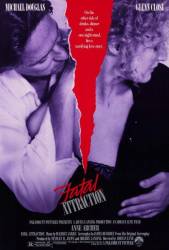
Fatal Attraction (1987)
1 stupidity
Directed by: Adrian Lyne
Starring: Michael Douglas, Glenn Close, Anne Archer, Ellen Latzen


Continuity mistake: One scene has Glenn Close in bed shot from profile, and the sheet in down exposing her breasts. The film cuts to a frontal shot and the sheet is up around her neck. When it cuts back to profile, the sheet is down again.
Alex Forrest: I had a wonderful time last night. I'd like to see you again. Is that so terrible?
Dan Gallagher: No. I just don't think it's possible.
Trivia: In the cocktail party scene, there is a quick shot of the large crowd attending the party. Look closely at the dark-haired man near the front of the party goers - it's James Eckhouse, who played Mr. Walsh on "Beverly Hills 90210" He also had a similar, uncredited role as an 'extra' in the first bar scene in the movie "Cocktail."
Question: Why did Alex kill Ellen's pet bunny and how did she get inside the house to boil it? Didn't Dan and Beth lock the door?
Answer: Because she is insane! And she picked the lock. By murdering the innocent pet bunny rabbit Alex was sending a message. She won't be ignored! She's just letting Dan know that she can get to him, or in this case his family (daughter's pet), anytime she wants to. He's not safe.
Alan Keddie