Lost in Translation

Audio problem: When Bob carries Charlotte back to her room, he opens her door using a regular key (you hear the "teeth" going into the lock, as as it turns). But when he comes out of the room and closes the door, you can see it's actually a card-key access room (the card-lock is on the right side of the door). While some card keys (with holes) rely on mechnical force and makes sounds like a regular key, it is an older system. This is a top Tokyo hotel, which would only offer the best and most modern equipment to its customers, i.e. top-of-the-line, silent (non-disturbing) card keys. (00:52:00)

Sereenie

Upvote valid corrections to help move entries into the corrections section.

Suggested correction: Park Hyatt Tokyo does use a classic turn key for their rooms.

Lost in Translation mistake picture

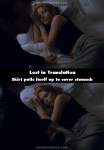
Continuity mistake: When Bob puts Charlotte into her bed, he first lays her down with her skirt slightly pulled down so that her belly button is showing. In the next shot, the skirt is pulled up to meet the bottom of her shirt-barely any skin is visible. (00:52:15)

More mistakes in Lost in Translation

Bob: What did you study?
Charlotte: Philosophy.
Bob: There's a lot of money in that racket. You just have to work out all the angles.

More quotes from Lost in Translation

Trivia: Charlie Brown is an actual friend of Sofia Coppola. His real name is Fumihiro Hayashi and he owns a fashion magazine in Tokyo.

More trivia for Lost in Translation

Question: In one of the Special Features on the DVD, it shows Sofia Coppola and the rest of the cast and crew fulfilling a pre-filming tradition of holding hands and saying a word that sounds like 'puaba' three times. Can anyone tell me what this word means and why it is a tradition in Sofia Coppola's family?

Answer: I believe that it means something like "good luck", as she hoped the production goes as smoothly as possible.

Answer: Her aunt, Gia Coppola, once said in an interview, the word is "Puwaba," which she believes is for good luck and she doesn't really know the meaning. So maybe Sofia doesn't know as well.

Answer: I believe the word, pùaba, comes from Corsican. It means "I did." Not sure if this is correct, but Corsica is near Italy and France, and she's Italian? Closest match I could find.

More questions & answers from Lost in Translation