
Question: Is there a reason Dracula was able to walk in daylight, or did the filmmakers just ignore the whole "vampires can't walk in daylight" bit?
Answer: To add to the other answers, the "sunlight kills vampires" lore started with the 1922 German silent film, Nosferatu. The screenwriter wanted to add an unexpected twist to the story that differed from Bram Stoker's 1897 novel. It became the accepted vampire mythology in most films and books for many years after.
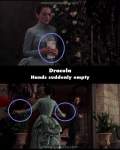
Continuity mistake: When Mina receives the letter after Jonathan escapes, she's holding it in her hands as she begins to climb the stairs, but in the next shot, her hands are empty, best seen when Van Helsing holds her hands. (01:10:00)
Suggested correction: Mina is in two different sets. The first she is in front of a gate. Of course, she has plenty of time to put the letters away.
I have checked the scene and you are absolutely right - Mina is indeed standing at the gate in the first shot, which gives her enough time to put the letters away before walking up the stairs to see Lucy in the second shot. Sorry, my bad.
Corrected entry: Drew Barrymore was considered for the role of Mina Harker.
Correction: This seems unlikely, given the film's adult content and Drew Barrymore's young age at the time, and the fact that Winona Ryder was selected for the role of Mina even before pre-production began: As stated on page 9 of the 1992 official behind the scenes book "Bram Stoker's Dracula: The Film and the Legend", she had read the screenplay and was interested in playing the role even before director Francis Ford Coppola became involved. She then gave the script to Coppola, who agreed to direct and to cast her in the role of Mina.
There's a few articles/sites that make this claim, although none seem original (like they're just repeating what's online) and there's no source cited. Another article says she auditioned, which is more likely. But just because she auditioned didn't mean she was "considered." Most of these trivia entries where they say "considered" usually don't mean the person was seriously in contention to get the role.
Continuity mistake: When Prince Vlad enters the chapel to find Elisabeta dead, as the camera pans toward her, the floor in front of the baptismal font is clean, but in the high angle shot where Vlad cries out and tilts the basin, two small pools of Elisabeta's blood can be seen on the floor (the same blood that is washed across the floor by the holy water in the following close-up of the font hitting the floor). (00:03:10 - 00:04:10)
Suggested correction: Elisabeta drowned; the only blood we see is by her mouth. The red patch on the floor is just a shadow - this becomes apparent when it follows the priest as he moves.
No, the mistake is correct, you are confusing the blood stains by the baptismal font (sitting at her feet) with the shadow above her head: As Vlad enters the chapel, the camera slowly pans toward Elisabeta and the floor in front of the font is clean. In the high angle shot where Vlad cries out and gets up, we see two small pools of Elisabeta's blood in front of the font. In the following close-up of the font falling, we see a pool of blood at the bottom of the shot which is then washed across the floor by the holy water.


Answer: In Bram Stoker's novel on which the film is based, Dracula can be exposed to daylight, and while it diminishes his powers, it doesn't kill him.
Sierra1 ★
And the narrator specifically said that in the film.