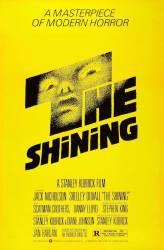
Question: Who hurt Danny after his visit to room 237?
Chosen answer: In the book, after Danny visits room 217 (237 for the movie) the ghost of the woman who killed herself in the bath chokes him.
Answer: In the 80s it was the old lady's ghost who hurt Danny. This was a repeat of the 20s when the actual old lady lured Danny in her room and tried to bite him and satisfy her hunger. (Given the lack of food due to snow storm).
I keep seeing things relating to the "20s version" and the "80s version " what is this about? I didn't even see them mention the 1920s until the picture at the end.
Throughout the movie there are flashes to the 20s which is seen as vision of what has already happened or as Jack's "psychotic break delusions." Since his soul is linked to the hotel, he returns time and time again (shown by the photo at the end of the movie). There are 2 versions, the 20s and the 80s. The 20s is when Jack and his family were at the hotel, snowed in and they resorted to cannibalism (the lady in the room 237), as seen in the photo. In the 80s version, his reincarnated soul is drawn to the hotel and we see bits of the 20s through flashbacks or delusions. For example, the ball is a delusion or reincarnated vision of him there before. It is more evident in the book when he hears voices of the hotel. As well, the blood vision in the hallway coming from the elevator is a reference to the 20s.
Question: Who is the old woman in room 237 and what is her significance?
Chosen answer: In the book, she is Mrs. Massey, an older woman who is seducing a man much younger than her, until late one night he leaves in the car they arrived in, and doesn't return. Distraught, Mrs. Massey kills herself with liquor and sleeping pills while taking a bath. However, since none of this is in the actual film, fan theories have sprung up regarding her importance to the movie. One theory is that she is in fact Grady's wife, and 237 is where he murdered his family.
I don't think this is quite as true because the twins are Grady's children and they are seen to be killed in the hallway in a vision of Danny's when he was riding the bike through the hotel. Therefore, the movie version could be the wife of Grady in room 237 however the children were not there and not killed there at the time. However, why would she have been staying in room 237 if there is the apartment for the caretaker?
Answer: Her significance to the story is that she is one of the most powerful spirits that resides in the hotel. When Jack enters her room, she appears to him as a young and beautiful woman at first. This symbolizes his embracing the evil of the hotel, while Danny sees the hotel for what it really is. The aftermath of his visit to room 237 shows that the hotel has Jack in its grasp, as he lies to Wendy about not seeing anything in the room. He knows Wendy would want to leave, whereas he wants to stay.
Answer: The old woman in room 237 could have been a sex-worker. The shining parallel story shows Jack going in and having sexual advances with her (before they cut it with her current rotten version). Until one day, she lures Danny in her room and bit him out of hunger. That's when Jack goes in the room and kills the old lady.
Question: What exactly happened to Jack? Why is he in that picture at the end of the movie?
Chosen answer: There are two possibilities: Most likely, Jack's soul is forever linked to the hotel, and every once in a while, he is reborn into the world, only to return to it, and instigate more killings. Basically, he is constantly resuming his duties as the caretaker of the spirits in the Hotel. That, or every time someone dies at the hotel, their soul becomes linked to it, and the photo at the end changes to illustrate that link. However, if that theory were true, then the cook would also be in the photo.
The cook would not be in the photo, as he was not succumbing to the Hotel, he died fighting it, and therefore his soul does not "belong" to the Overlook.
Jack is never reincarnated. Period. The hotel decides that Jack will become the next caretaker in the afterlife when he attends the initial interview! Therefore, when he dies, he becomes part of the ghosts in the hotel and immortalized in the infamous group photo on the wall! And he will make his presence known to the next victim.
Answer: I always believed, as have others, that anyone who is "killed" by the hotel has their soul added to the hotel which materializes as them being added to the picture.
Yeah, but it seems kinda weird he is in the middle of the picture with everyone around him even though he was added last. And the ghost calling him "the caretaker" suggest he is the caretaker in that picture too, so the same person as the original one who was caretaker all that time ago.
Answer: The point of the picture at the end is to show Jack has indeed been at the hotel before. This explains the deja vu he feels upon entering the hotel. Notice none of the other ghosts, such as Delbert, the twins, Mrs Massey, etc. are visible in the photo. That's because they were at the hotel after 1921. The answer that says his soul has been around a long time is correct.
Question: Are the ghosts real, or does Jack just imagine them?
Answer: Both Kubrick and King stated there were ghosts in interviews so as they are essentially the creators I would say there are.
In all fairness, Kubrick, unlike King, leaves the existence of ghosts somewhat questionable. The whole thing can just as well be just Jack succumbing to cabin fever: he loathes his family, and the long isolation just pushes him over the brink. Wendy witnesses the ghosts, too, yes, but she could also be suffering from cabin fever, not to mention the stress of her husband finally going insane, and trying to murder her and her child. In short, the whole existence of ghosts is a lot more ambiguous in the movie.
Question: Who is Tony?
Answer: Tony was a god-sent to change the course of history, which ultimately saved Danny and his mother in the 80s compared to the 20s when both of them were finally killed and eaten by Jack. Tony appeared in Danny's life when he started reading alphabets and his main message was 'REDRUM'. This was critical in the movie, as its mirror image 'MURDER' saved Wendy's life in the 80s.
Question: Why is the supposed foreign version of the Shining with the deleted ending impossible to find? Does anybody have this version or know how to get it? I have a feeling it's an elaborate Internet rumor and does not actually exist.
Chosen answer: Stanley Kubrick changed the ending of The Shining after it had been in theatres for about three days. About ten minutes of footage was removed. The full US theatrical version runs 145mins, everywhere else 115mins after Kubrick trimmed the movie to remove what he considered "unnecessary" scenes. There is no specific "foreign version" save for cuts any TV networks may make for transmission.
Answer: In addition, the footage is impossible to find because Kubrick had all of the unused footage destroyed. You can read about it here https://ew.com/movies/2017/03/30/shining-ending-explained/.
Question: Actually a further answer to the person who inquired after Jack's picture being on the wall at the end of the movie, a picture dated during the 1920s. Some interpret the hotel itself as both a real place and a symbolic representation as the working's of Jack's mind. Hence, as he gets crazier, it gets crazier. Grady's comment in the restroom to the effect that "you've always been the caretaker" ("you've always been responsible for what goes on here") could be taken as an allusion to this idea. Remember that Jack sees far more supernatural events than the rest of the family, and most of what Danny sees is in visions. So how much of it "really" occurs?
Answer: The hotel is both real and metaphorical, while half the story being told is a complex supernatural horror story, the other half is a overlying metaphor for mental insanity. There are allusions to this though out the movie as you said, the line "you've always been the caretaker" hold a double meaning. First it is a reference to the fact that he is the reincarnation of a malicious spirit, Second it is a reference to how Jack's insanity was foremost caused by his weak will. There are multiple clues to this metaphorical context in the sense that the movie depicts many of the stages and symptoms of a severe mental break (e.g. Substance abuse, Insomnia, Night terrors, Loss of inhibitions, Loss of logic, Loss of compassion, Delirium, and Incoherent or illogical speech.) Most of these symptoms were brought on by Jack's weak mental will. He was the one who kept himself awake, he asked for liquor before it appears, and he made the choice to engage the seductress.
Answer: It all really happens. He goes crazy because the hotel is working its supernatural powers on him, so by the end it is easy to persuade him to do its dirty work. The point of the picture at the end is that Jack keeps returning to the hotel in different reincarnations and getting the job as the caretaker. If it were all just visions, who unlocked the pantry door?
Question: Early in the film the hotel manager mentions that the Overlook was built on an old Indian burial ground and that builders had to repel several Indian attacks during construction. Indian attacks? During the 20th century? And why mention this detail, since it was never mentioned again or became part of the story.
Answer: "Indian attacks" just means attacked by Indians who owned the land. It does not necessarily mean Indians with warpaint/horses/etc., just that the attack came from the tribe who owned the land. As for him mentioning it to Jack, he is just giving him a brief history of the Overlook Hotel, as Jack will be the caretaker and might want to know about the history surrounding the Overlook.
Question: One of the corrected entries here says that the film was shot entirely at Elstree Studios in England. Why? I mean with all the possible locations in the US especially Hollywood and all the facilities they have there, why was the entire film shot in England?
Chosen answer: Many major US-financed films have been shot in England. Parts of the original Star Wars trilogy, the Indiana Jones opening sequence, the first three Alien films and a great many others were all shot in the UK. The rationale is often financial - it can simply be cheaper to make films outside the US, with Australia being another common choice. In Kubrick's case, part of the rationale may well have been financial, but he also had a fear of flying, so made all his films from 1962's Lolita onwards in the UK, where he lived. Exterior shots in the film were shot at Mount Hood in Oregon and Lake Louise in Alberta.
Question: In the book, there is a bit (I'm not sure which chapter) where Danny is in the playground and is nearly trapped in a cement tunnel with what he thinks is a demon that doesn't want him to leave,and the swings move on their own.There are also lots of bits in the book where he is chased by the hedges shaped like animals but never sees them move, just hears them.Is there a good reason why this wasn't in the film, because for me they were the scariest parts?
Answer: I know they cut the hedge animals simply because the special effects to make hedges move were deemed impossible to do at the time. But both of these scenes were included in the TV miniseries "Stephen King's The Shining", http://www.imdb.com/title/tt0118460/.
Question: Why exactly is this film (and the book it was based upon) called "The Shining"?
Answer: It refers to the "gift" that Danny and Mr. Halloran shared as in this quote from Mr. Halloran: "I can remember when I was a little boy, my grandmother and I could hold conversations entirely without ever opening our mouths. She called it shining."
Question: I know the phrase "All work and no play makes Jack a dull boy" is supposed to be scary, but I don't understand. Why is it scary and what does it mean?
Answer: The phrase depicts how in the 20s while doing the human flesh butcher job over and over, Jack had started to become dull. This is also visible in 80s Jack's behavior. This ultimately led him to take extreme step of killing his wife and kid out of hunger.
Question: According to many websites including IMDB, it says Staney Kubrick demanded about 128 takes of Shelley DuVall saying a line. Does anybody know this scene and specific line?
Chosen answer: The scene was from when she discovers all his papers just say "All work and no play..." to when she bonks him on the head. That was one continuous scene, with no cuts, and Mr. Kubrick wanted it perfect.
Question: What does "Here's Johnny" mean? Torrance says this as he chops down the bathroom door.
Question: We see Jack in the picture at the end of the film which was painted in 1921 which I guess means that Nicholson was either possessed or reincarnated...but does anyone have a definite answer? Or does Kubrick just want us to decide for ourselves?
Chosen answer: The idea is that Nicholson's soul has been around for a long time, and that each time he is reborn he returns to the Overlook Hotel and goes on a murder spree. This is facilitated by the evil, restless spirits residing in the hotel. The movie definitely drops some hints that Jack is a reincarnation in the following scenes: After they have been at the Overlook awhile, Wendy talks to Jack upstairs in the bedroom after she brings him breakfast. Jack tells Wendy that he feels like he has been at the Overlook before and upon being given the initial tour of the hotel, he almost knew what was around every corner. According to Delbert Grady during the chilling bathroom scene, Jack has always been the caretaker, which most certainly suggests he is a reincarnation.


Chosen answer: This is a very old expression meaning that if someone, anyone, does nothing but work all the time and never takes time for recreation or relaxation, they will become a dull, uninspired person. Jack, the main character, is twisting the expression in a malevolent way as his mind and body are being taken over by evil ghosts. It's origin was from typing classes, used as a sample phrase for children to articulate movement across the keyboard.
raywest ★