Question: There are two scenes on the boat after they have seen the shark and Brody has a panicked look, while in the background a shooting star passes right behind him. This happens twice, but it's in the day time. Was it real?
Question: In the Camelot scene, there is a man that says something like "I like to push the pramalot" what is he saying and what does it mean?
Answer: He says "I have to push the pram a lot!" implying that he's left to look after the children.
Answer: There isn't much meaning. It's a funny idea that a knight has to push a stroller and the words "pram a lot" are there because they rhyme with Camelot.
A pram is a stroller, so the knight is saying that he is taking care of a baby.
Question: One of my co-workers said the first line in the show was, "Michael Renee was sick the day the Earth stood still". Could you give me the exact first line and what it means?
Answer: The first line to the lyrics of 'Science Fiction/Double Feature' is "Michael Rennie was ill The Day the Earth Stood Still, but he told us where we stand." That line is a reference to the 1951 film classic 'The Day the Earth Stood Still', which stars Michael Rennie as Klaatu, the alien from outer-space, who is shot at the start of the film when he tries to convey a dire message of goodwill to the humans. The rest of the song lyrics refer to other science fiction films including 'The Invisible Man' starring Claude Rains, 'King Kong' starring Fay Wray, and 'Tarantula' starring Leo G. Carroll.
Question: When the motorcycle went into the trees and was pulled out, was that in the script?
Answer: Also, those weren't stuntmen.
Answer: No but the accident was left in the film.
Question: When the train on fire reverses back into town, the fire bell is rung. A couple of blokes running out of the saloon are yelling out that the train's on fire. How did they know what was on fire?
Answer: Because it was the train station fire alarm.
Question: How did Sonny know that the black limo driver was a cop?
Answer: He didn't. He just assumed the cops would try something like that, substituting a cop for the real driver. What he didn't anticpate is that they had substituted cops for everyone around the bus when it arrived, and when he replaced the black driver he would have to (unknowingly) pick a cop, regardless. Incidentally, this part of the story is completely factual, it actually happened that way.
Question: When the train is put into reverse, Bronson and the major jump off. The Indians get into the box car then the train stops. Who stopped it?
Answer: Ben Johnson and Charles During. Their characters had guns pointed at them, they stopped the train suddenly to knock them off balance. As soon as Bronson and the Major jumped off the train, Johnson and During took control of the engine.
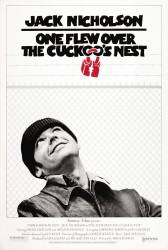
Question: I'm not from the USA so excuse the lack of knowledge, would pleading insanity really get you off a rape charge?
Answer: 1) McMurphy didn't exactly "get off" by reason of insanity; he was still incarcerated for an indefinite amount of time, just in a psychiatric facility rather than a traditional prison. 2) He was originally sent to a normal prison for the statutory rape charge, but is then transferred to the mental hospital due to repeated acts of aggression that suggested some form of psychosis (or, as the doctor suspects, faking it to get out of hard labor). 3) No, it wouldn't. The insanity defense is a) very rare and b) very hard to prove, and it would be difficult to apply to rape, statutory or otherwise.
Answer: Insanity, legally, is defined as not knowing right from wrong. It can also be "temporary." It can only be diagnosed by a licensed psychiatrist, and it is rarely determined as such. Laws vary from state to state, but if a person was guilty of a serious crime and was found to be insane, they'd be confined to a mental hospital, either long-term, permanently, or, if they sufficiently improve, they'd be either be released after a certain amount of time or transferred to a general prison to complete their sentence or remain there indefinitely.
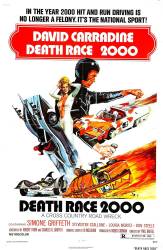
Question: I have two questions. Firstly, was getting to shake the presidents hand all the winners got, or was there anything else? And secondly, were the drivers allowed to kill the other competitors as well? Just seems odd to me that the officials who kept track of every killing in the race covered up the fact that Frankenstein had killed Joe Viterbo at the end (blaming the resistance instead).
Chosen answer: Like the Olympic gold medal winners, the winner gets t.v. exposure, acting roles, product endorsements, VIP treatment into exclusive parties and bragging rights. By blaming the Resistance, that paints them as the villains and keeps the race going.
Answer: Although the 1995 documentary "The Making of Jaws" claims that the shooting star was real, the fact is that the shooting-star background effect is a Steven Spielberg trademark in most of his films (first noticed in "Jaws," but also appearing in "Close Encounters," "E.T. The Extraterrestrial," "Indiana Jones and the Temple of Doom," "Saving Private Ryan" and others). Spielberg has always had a fascination with shooting stars, dating back to his childhood, and he works them into almost every film. Http://americanprofile.com/articles/steven-spielberg-shooting-stars-movies/.
Charles Austin Miller