Trivia: To get the pale, colorless skin of the programs in the cyberworld, all the footage of the actors was filmed in black and white/grey scale, with the neon colors added in post production.
Quantom X
28th Oct 2025
Tron (1982)
28th Oct 2025
Tron (1982)
28th Oct 2025
Tron (1982)
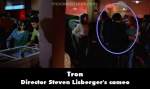
Trivia: In the arcade, there's a shot of a man dressed in black going up and hugging a girl. Even though he's only seen from behind, this is actually a small cameo by the movie's director, Steven Lisberger. (00:17:32)
28th Oct 2025
Tron (1982)
Trivia: The character Alan Bradley in Tron was inspired by real-life computer scientist Alan Kay, one of the pioneers of modern computing. Kay helped invent the concept of the personal computer, including early ideas resembling today's laptops with graphical user interfaces. He was also instrumental in developing object-oriented programming, a key software design principle. Fittingly, Kay served as a consultant on Tron, bringing authenticity to its digital world.
28th Oct 2025
Tron (1982)
28th Oct 2025
Tron (1982)

28th Oct 2025
Tron (1982)
28th Oct 2025
Tron (1982)
Trivia: Before Tron became a Disney film, creator Steven Lisberger's studio developed an animated test featuring a glowing, backlit line character made from Kodalith film. The short depicted a "liquid neon" figure smashing two discs of light together. The team nicknamed him "Tron," short for "electronic," and this experimental test ultimately inspired Lisberger's idea for a full movie built around luminous, backlit digital characters.
28th Oct 2025
Tron (1982)
28th Oct 2025
Tron (1982)
Trivia: Director Steven Lisberger was inspired by the video game Pong and the stories of Alice in Wonderland to create this movie, using those stories to fantasize what it would be like for people to find themselves being thrown into a virtual world.
28th Oct 2025
Tron (1982)
Trivia: Many animators at Disney chose to boycott working on this film, out of fear that the use of computer-generated work and special effects and art would put the hand-drawn artists out of work and become the industry norm. This mirrors a lot of the current-day concerns about AI-generated art.