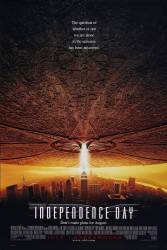
Question: Several times near the end of the movie, there is a biker type man. He is wearing some Harley Davidson clothing and a black leather cap. He is one of the pilots. He stands out if he is just an extra. Is he anyone famous?
Answer: He is just an extra, who just happens to be in more shots then the other extras. He is not more famous than the other extras.
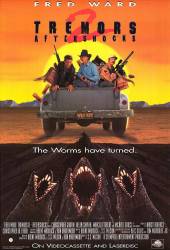
Question: Does anyone know the song that plays on the radio after a Graboid swallows it?
Answer: Trouble by Travis Tritt.
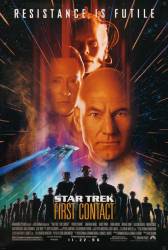
Question: How did the Phoenix land on Earth after the warp display for the Vulcans? It looked like a non-reusable rocket to me.
Answer: While the main fuselage was a re-purposed intercontinental ballistic missile, and they separated from the ascent stage of the rocket, the payload section housed two deployable prototype warp nacelles capable of achieving lightspeed. Beyond that, the payload also contained the prototype warp core (which was powered by matter/antimatter annihilation), the warp core coolant, elaborate magnetic-containment systems, and probably even impulse drive and landing thrusters (It kind of goes without saying that thruster and impulse technology would have existed before warp technology). There was no space left over in the payload section for conventional rocket propellant, and Zefram Cochrane's enormously-expensive and one-of-a-kind warp components would not be expendable; so he must have devised a way to safely bring the Phoenix down for re-use. Since the Phoenix's return and landing were never addressed in the film, my assumption is that the payload section was powered entirely by the warp core, including its impulse drive and landing thrusters.
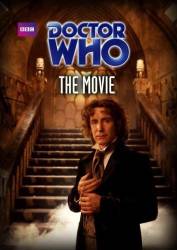
Question: How could The Masters' trial and execution take place on Skaro when it was destroyed in "Remembrance of the Daleks"?
Chosen answer: They don't specify at what point in Skaro's history it took place. Only the passage of time on Gallifrey is absolute.
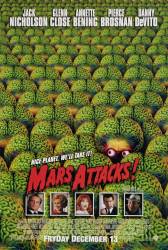
Question: I heard this movie was a remake or a compilation of different themes used in 1950's mars B-movie remakes. What are some of the themes of the movies that this movie takes? Such as, In Mars Attacks they use the music to kill the aliens I believe is a rip from a 50's movie where they use sound waves to down martian spaceships. What movie was that?
Chosen answer: While the movie is a parody of the 50's sci-fi B-movies, the film is actually based on the Topps 1962 science fiction trading card collection called "Mars Attacks!", which tells the tale of the Martians' attack.
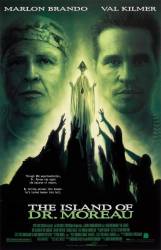
Question: What did Dr. Moreau hope to accomplish by turning all of the animals into humans?
Answer: I don't know which movie version you're referring to, but in the 1977 film, he stated by controlling and manipulating the genetic code, he could remove all the defects from humans. No more mental or physical handicaps. No inherent genes passed from generation to generation. No dwarfism, blind or deafness.
Thank you. And I was referring to this version.
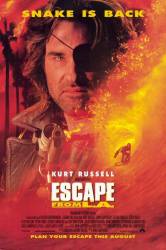
Question: When talking with Hershey, Snake mentions bluebacks. What did he mean by that?
Answer: From online sources: Bluebacks are a form of currency used in the dystopian Los Angeles. They are specifically mentioned as the currency used to pay Hershe and her gang for their assistance in rescuing Utopia. Snake Plissken agrees to pay $1,000,000 in bluebacks for their help.
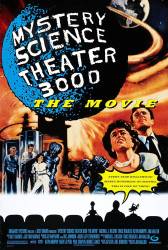
Question: This applies to the TV series as well as the Movie. How are the "watching the movie" segments filmed? Are they literally sitting in front of a large screen? In some of the TV episodes, Joel/Mike is seen pointing to something on the screen. And do they film each segment as one, or is it cut into different takes?
Chosen answer: They sit in front of a big screen -- or rather Joel or Mike sat. The puppeteers crouch down below the row of seats and hold up special black puppets to project the silhouettes. They did do takes for segments of the movies. I imagine it would be painful for the puppeteers to crouch for 90 minutes!
The robot puppeteers laid down on the floor and the human host deeply reclined in front of a piece of plywood cut in the shape of the seatbacks. There were TV monitors playing the raw cut of the film in front of them with their lines on a teleprompter. The theater screen itself was simply a giant green screen which had the movie video added to it in post production. Search for "Last Dance RAW" for a few behind-the-scenes and some in-theater excerpts from the last TV broadcast episode.
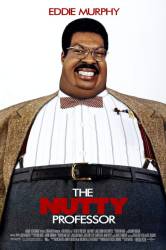
Question: Does anyone know where I can get the script for the "table scene" or a listing of the dialogue?
Chosen answer: A dialogue transcript can be found here, though cast names are not included: Nutty Professor Script Transcript.
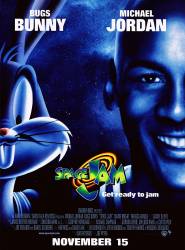
Question: What is meant by the film's MPAA rating which states, rated PG for "mild cartoon language"?
Answer: Some parents might not be comfortable with the language the cartoon characters use, as some of what they say is akin to swearing.
Answer: In the book of the same name, this man is called "Pig". He was a test pilot during the Vietnam War. He played a crucial role in training the new pilots.