Question: Why wouldn't Shmuel escape? It would've been very easy. He could've done it the same way he let Bruno in.
Answer: Samuel knew the dangers of the camp and knew that trying to escape would result in death. He knows Bruno is likely to be allowed IN to the camp as he is a German and Germans are running the camp. Plus, if Shmuel did escape, where would he go? He's 8, on his own and alone in the woods.

Question: Throughout the film you can see that Tank, played by Dave Power, has funny-looking thin black scars on both cheeks. Was this a makeup effect for the character (and if so, why did they do it), or does the actor really have these scars on his cheeks (and if so, what from)?
Answer: The scars you see on Tank's face are fake, pure makeup. They wanted the character to have a gritty look.
Question: Would a sergeant-major participate in a mission?
Answer: This one did, everything ascribed to him in the film was true.
CSM Plumley's records show that he served in 320th Glider Field Artillery Battalion as a scout. The 320th participated in two glider assaults in the European Theater. Also, Plumley never served in Korea during the Korean War, so he couldn't have participated in one of the two combat jumps of that conflict. His record book indicates he was at Ft. Campbell, Kentucky (1951 to early 1953) when he received orders to Germany. Finally, he never claimed to have made any combat jumps in his career.
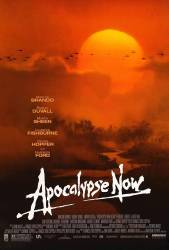
Question: Would anyone happen to know what song is playing in the background on the radio beside the intelligence officer sitting at the bar when Martin Sheen enters the Generals trailer and is being interviewed by Harrison Ford for the first time?
Answer: It's not any specific song; it's just the kind of generic piano music you'd hear at dinner at a high-class restaurant of the era. Think of scenes in movies, films, etc. set or made in the '50s and '60s, where the characters go to a nice dinner and there's someone at the piano playing unobtrusive music to accompany the food/conversation.
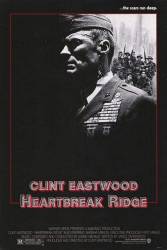
Question: Why was the platoon making such a big deal about wearing shirts during their exercises? I would think they would be better off wearing shirts so they would not get a sunburn. So what was the big deal?
Chosen answer: Gunny Highway insisted that they all wear the same shirts as he himself was wearing. If they showed up in a different one, he made them go shirtless. The reasons for this were 1) to break through their rebellious attitudes and teach them to follow his orders, 2) to make them look and feel unified, and 3) to develop resourcefulness and adaptability in them.
To also display esprit de corp to other units gaining them respect from those units as well as command leadership.
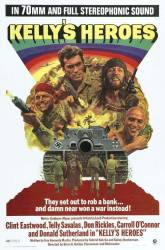
Question: What type of Allied fighter destroyed the units vehicles? It doesn't look like any allied combat aircraft I've seen before.
Answer: It's a Yugoslav Soko 522 Ikarus.
Chosen answer: From the markings it looks like a P47 jug. Strange thing is it was equipped with rockets, which I have only seen outfitted on the P-38 lightning and the P-51 Mustang. Kelly's is a great movie but far from historically accurate. There is a country song Odd Ball Plays as the blow up the rail yard that not even close to having been released at the time.
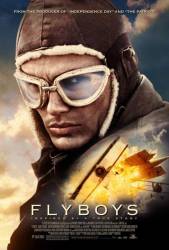
Question: The Dr. 1's are repeatedly shown opening their attack by diving down on their enemy. I know that Dr. 1's (because of their tri-wing configuration) had excellent climbing abilities, but it was hopeless at diving. So my question is: was this a common tactic for German pilots (specifically in the Dr. 1) to do this?
Answer: Easy answer. In WW1 and WW2 pilots would attack with the sun behind them as it made them very hard to spot. "Beware of the Hun in the sun" Once the missile age started it didn't matter.
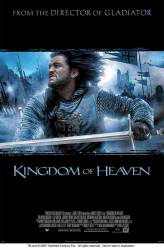
Question: What is the hospitaler inserting into his mouth as he squats near the creek?
Answer: I thought it was cotton with oil of clove for a bad tooth.
Answer: The answer is a "miswak," a dental hygiene twig used, and still used, for cleaning the teeth.
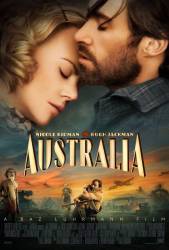
Question: Why did Fletcher stop up the water pump at Faraway Downs?
Answer: So they'd be unable to water their cattle. Which has two benefits for Fletcher. The first being that they'd have to take their cattle to the watering hole on the border of their property, making it easier for Fletcher to steal the cows. Second, and more long term, their cattle would be of poorer quality due to lack of proper care. The ranch would lose money as a result, and they'd be more amenable to selling the ranch to their competition, whom Fletcher works for.
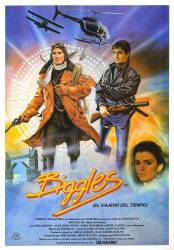
Question: How was Biggles able to land the helicopter on a moving train despite only just learning to fly it?
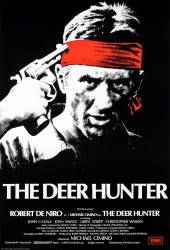
Question: What does "mao" mean?
Chosen answer: The whole phrase is "di di mao", which basically mean go now, or hurry up.
Question: What are the rifles that Jude Law and Ed Harris use in this film?
Question: What exactly is a chafing dish?
Chosen answer: A chafing dish is a large metal pan or glass container (either is called a "dish") that is used to serve hot food at a buffet. The dish fits into an elevated metal stand that has one or more holders on the bottom for small sterno containers. The heat from the lit sterno keeps food warm.
Question: In all honesty I have little (if any) anthropological knowledge of what life was like for Native Americans in the USA in the nineteenth century. But it seemed to me that, for much of the time, the Native Americans in the movie did not resemble the members of a 'hunter gatherer' society whose way of life was under threat from the onset of the modern industrial world. Instead the Native Americans seemed to live, act and behave much more like the members of a 1960's hippie commune. How accurate is that?
Answer: Some members of tribes like the Cheyenne joined in the 'modern' world to some extent, using guns and even putting on Western clothes and eating Western food. While nowhere near the technological nous of the white settlers, the natives were far from being hunter gatherers at this point.
Answer: Well observed sir! What you say is correct. I admit I probably was wrong in calling Native North Americans 'hunter gatherers' as I think some tribes had agriculture and permanent settlements well before Columbus ever reached the American Continent. I also think that the Cherokee consciously tried to adapt to modern life by building houses and becoming farmers. My point was more that it seemed to me that the portrayal of many Native Americans in Little Big Man did not seem historically accurate, but showed them as being more like 1960's hippies. But I am fully aware that this may have been intentional, since the film was giving a 1960's 'spin' on the legends of the 'Wild West'. But please, do not take my posts on this website too seriously. I am fully aware that this was a film made to entertain people, it was not meant to be a historical documentary. And it was the fictional recollections of a 121 year old man. And the film poster said 'Little Big Man was either the most neglected hero in history OR A liar of insane proportion', so you are invited to have your doubts about anything that happens in the film.
Rob, you may want to look into reading the novel the film was based on written by Thomas Berger. He wrote some pretty twisted stuff.
Question: Where exactly was Dolittle when pearl harbor was being bombed?
Chosen answer: Probably in Washington. He rejoined active duty in 1940, was assigned to consult with industry re aircraft manufacture; also a trip to England on special mission to evaluate other countries' air power. He requested a return to flying status but was refused. He then was asked to assess feasablity of a air attack on Japan from carrier based planes, and when he asked to lead the mission his request was accepted.
Question: After Mary is raped, she begins cleaning herself off in the water in front of Alasdair who immediately figures out what happened and of course wants to tell Rob, so he'll avenge her. But she's extremely adamant that Alasdair not tell Rob about it. But if she REALLY didn't want Rob to know, wouldn't she have waited until she was alone to clean herself up? I'm always confused by this, because when she tells Alasdair to keep quiet, she never seems to be hinting that she doesn't really mean what she says. On the contrary, she's very passionate about it.
Chosen answer: She wants to clean herself thoroughly ASAP, so as to avoid pregnancy (though that way doesn't work anyway); if she waited until she was alone, it would've been too late to even try.

Question: Possible plot hole: Why did Claire take and hide the last 4 Kestrel messages?
Chosen answer: This is not a mystery. Claire "stole them to read them" as Tom Jericho told Hester. As he later explained to Wigram, she had taken the messages to give to Puck who had the means to decipher them, and who was looking for his missing brother. The Kestrel traffic from ADU contained the names of victims of the Katyn Massacre. However, Puck and Claire were surprised by the imminent reappearance of Tom, and suddenly fled, explaining why some messages were left behind.

Question: When marshal Ney and his troops encounter Napoleon, he tells them if they want to kill their emperor, there he is, but instead of killing him, they defect to him despite being ordered to fire. Is this a work of fiction, or did it happen in real life?
Answer: This is decidedly fiction. The historical Ney already published a boastful proclamation (that Napoleon later said disgusted him), declaring the rule of the Bourbons to be over, before he met with Napoleon (March 15). The scene where Napoleon offered himself to be shot had happened several days earlier, with the 5th regiment of the line, before Napoleon even reached Grenoble. It's an entirely different event from Ney's defection.
Answer: I think the film's dramatisation of this particular incident, when the French army defected from the restored Bourbon royal family back to the Emperor Napoleon might owe something to the painting NAPOLEON RETURNED painted in 1818 by Charles Steuben (also called Charles De Steuben and Karl Steuben) a German who became a nationalised (and patriotic) Frenchman https://commons.wikimedia.org/wiki/File:Napoleon_returned.jpg.
Answer: Yes, that is pretty much what happened, so long as we allow for translation convention. (Napoleon and his armies spoke 19 century French, while the actors in the 1970 film speak 20 century English). After Napoleon's first abdication Marshall Ney submitted to the returning Bourbon monarch, Louis XVIII. When Napoleon returned to France, Marshall Ney was given command of an army to apprehend Napoleon The Emperor Napoleon with a small group of imperial guardsmen confronted Marshall Ney with a massively larger and better-equipped army. Many people expected a bloodbath. Instead, Napoleon waked out in front of his guard, confronted the French army and called out that if any soldier wished to shoot him, this would be the best chance they would ever have! The army simultaneously rushed to greet their emperor, Marshall Ney followed and submitted to Napoleon. This bit of the film is as historically accurate as can reasonably be expected and shows how Napoleon could electrify an army.
Answer: In several location throughout France, from Paris to Mertz, with many scenes being filmed on location. You can find more details on IMDB or Wikipedia.
Bishop73