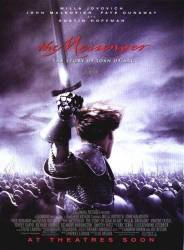
Plot hole: Joan of Arc is called to save Orléans from the siege of the English. But if you look In the scene where we see a bird's eye view of the city, you will notice that there are no guards on its walls. A siege is the means enemy soldiers try to cut a city from its supplies and contacts. Those soldiers should be guarding it day and night, and sometimes even shooting arrows or rocks in it, until the city resigns. The siege we see at Orléans is nothing but a lonely catapult which shoots once a week.
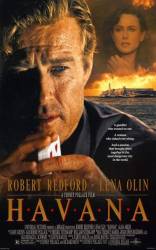
Plot hole: Roberta asks Jack to drive her car from the port to the casino to smuggle a transmitter through the checkposts. Since her links to the revolution were known to the authorities, and the chances that her car would be checked were much higher than with Jack's (which eventually also happened) it would have made much more sense if he had transported the transmitter in his own car. (00:08:00)
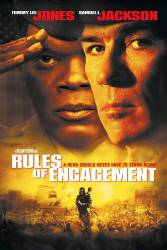
Plot hole: After the marines fire into the crowd and things die down, Jackson tells his men to stay down because of possible snipers. Yet he is standing upright the whole time. Not the best tactical move. One sniper and the mission loses its commanding officer.

Plot hole: Jennifer Ehle gets a note from her husband, who is a prisoner in the men's camp a few miles away, saying, 'We're escaping on Sunday night. See you in Sydney.' So, even though this note is going to be passed via several people, any of whom might betray him, not only does he explicitly say he plans to escape, but even when he's going to do it. No wonder he gets caught.

Plot hole: When Pumpkin is telling Sayuri about Hatsumomo talking to Dr. Crab, she says that she was waiting outside during the conversation, and while she could hear it, she couldn't see them. However, at one point Pumpkin describes a facial expression of Dr. Crab.

Plot hole: When it becomes apparent that the British will have to retreat, Matthews is instructed to disable the cannon. He reports to the Mr. Kennedy that he has spiked the cannon (a method of temporarily rendering the gun useless) and that he had, "blown the trunnions off for good measure." This would have turned the cannon into rather large boat anchors, so why bother investing valuable time in spiking them?
Plot hole: At the beginning of the movie, the German commander sends a radio transmission with the damaged sub's position at "AL 85-32." The German Kriegsmarine divided up the Atlantic in grid squares like these, but "AL 85-32" means the damaged sub is just roughly 375 miles west of Ireland, but more than 2700 miles from the US east coast. There is no way on earth the Americans beat the Germans to this location, especially since the German supply sub is already en route. Funny enough considering the controversy about the movie, for this position the British would have been in perfect position to intercept.

Plot hole: During the war sequence, when Samuel dies, how necessary was it for the two Germans to go through the trouble of setting up a machine gun to shoot him? I find it hard to believe they had no other weapon but that. It seems to have been done only to build suspense. (00:42:45)

Plot hole: How did Glabrus know about Silesian pirates aiding the slave army's escape? He informed the senate of this and yet was not made aware of it at the time of his capture.


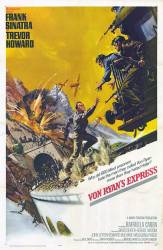
Plot hole: When the Major and Wadislav walk up the stairs in the German mansion they are met by a pair of German officers who say something to them. Wadislav then tells the Major that he couldn't understand a word they said. What they actually said was 'Nice weather, wouldn't you agree?' Wouldn't you think that a man who speaks German well enough to convince the guards in a German HQ would understand such a simple phrase? Wadislav was chosen specifically for his ability to speak some German.
Suggested correction: It might be a reasonable assumption, but it's also possible that he didn't. A character not knowing something that you think they should doesn't make it a plot hole. Regardless, no part of the plot of the film was broken by this; it's an irrelevance.
Plot hole: It's brought up several times that the kind of music Cronauer is playing is not acceptable. Then why would such records of those songs be at the radio station in the first place?
Plot hole: The radar operator reports a bogey at 15,000 yards, without, at first, giving a bearing, yet everyone on the bridge immediately looks to the starboard bow.

Plot hole: In the scene for Heihachi's funeral: Gisaku is at the funeral and is seen full face as Kikuchiyo shouts the bandits are coming. Everyone runs for their posts and bent over Gisaku is left standing by the grave. Kikuchiyo runs to dismantle the bridge with his crew when Gisaku's son, his wife and baby come by to get the old man who they say has refused to leave the mill. There is no way Gisaku could have outrun Kikuchiyo to the bridge and there is no way that his son and daughter-in-law could have known he was in the mill"
Plot hole: As the destroyer homes in on the Nerka, the sonar operator gives a running commentary of its actions. His last message is that he hears splashes of depth charges. As close as they exploded, he wouldn't be hearing anything else, because he kept the headphones on.

Plot hole: The movie is allegedly set about ten years after the death of the German soldiers, since the daughter of one soldier is in her early teens. But none of the items in the scenery look like they're out of the fifties.
Plot hole: David couldn't have seen Sutherland's photos because Sutherland hadn't had time to develop them yet. Even if he did, it would have been difficult to find a lab that wouldn't turn him in as a spy. Overall, it would have been much safer to have the film processed in Germany.

Plot hole: Why would the club/casino accountant let Jack take the money without reacting, and then - just as he got away, go berserk with a machine-gun - and keep shooting even though he was gone?