Factual error: Many of the panoramic scenes in this film capture breathtaking views of mountain ranges completely covered with snow - a geographical feature not to be found in the Holy Land. It is found on occasion, though, in Arizona, where these sequences were actually shot. Other scenes show desert bluffs, mesas and arches that are also not found in the Middle East: they're the distinctive formations of the Arches National Park in Utah, USA.
Factual error: At a very early point in the film, the King says something along the lines of "....and these are your playmates". In the background is a horde of 17th century ladies boating on the Achille Duchenne water parterre at Blenheim Palace. The palace wasn't built until the late 18th century, and the parterre was not designed until 1925.
Factual error: During their transatlantic boat trip, on their way to Athens, the American athletes are having fun naming various foods from back home that they already miss. One of them claims he misses chocolate chip cookies. Oops. That particular cookie didn't exist until Ruth Wakefield invented it in 1930.
Factual error: Rita says that George was a gunner in the RAF during the war. The photograph of him in uniform in his and Connie's house shows him wearing a (double wing) pilot's brevet instead of the single wing of an air gunner.
Factual error: The Sergeant-Major of the artillery section Corporal Bins and his men are briefly attached to has two of his medal ribbons round the wrong way. He has up the Victory and British War Medal ribbons, when they should be worn BWM and then VM. A mistake an experienced senior NCO would not make.
Factual error: The weapons for this film, save for the American Krag-Jorgensen rifles, British Lee-Enfield MLE rifles, and German Mauser Gewehr 98 rifles, are completely wrong. The Russians, who had Mosin-Nagants, are portrayed with Mausers. The French are for the most part correctly poratrayed with Lebel Mle. 1886/93 rifles, but a few have Berthier rifles that weren't used until 1907. The Austro-Hungarians are portrayed with a mixture of Mausers and Berthiers when they would have had Mannlicher M88/90's or perhaps Mannlicher M95's. The Japanese are equipped with Mausers and would in reality have had Muratas. The Italians have a mix of Berthiers and Mausers, but would've used Vetterli-Vitali rifles. The Chinese Imperial troops and Boxers both have Gewehr 98 Mausers. Although they did indeed have Mausers, they had the far earlier Gewehr 71's and Gewehr 71/84's.
Factual error: The attack on the OPEC meeting in Vienna takes place on December 21. Yet, when Carlos' team exits the tram, the trees are full with green summer leaves and the sun shines as it would on a high summer day.
Factual error: While flying across the U.S. before the Atlantic attempt Stewart lands and exits the plane. While doing a quick inspection of the airframe he approaches the engine and puts his hand on one of the radial engines cylinders which would have still been several hundred degrees, so should have resulted in a serious burn.
Factual error: At the end the narrator talks of "the Honourable" Winston Churchill. He was actually the Right Honourable.
Factual error: In this scene several sailors attack Alice Paul and tear down the demonstrator's banners. The older sailor's petty officer rank specialty insignia featuring three lightning bolts, Radioman, was not created until 1921, four years after this incident. (01:30:35)

Factual error: The plane used in the film to take Juliet back to London towards the end of the film is a replica of a Dakota C-47. She is painted with black and white "invasion stripes" on both the upper and lower surfaces of the wings - approved in May these were only widely put into use for D-Day in June 1944. After one month the upper surface stripes were ordered removed, and by the end of 1944 they were ordered completely removed. By 1946 when the film is set they would have been long gone from any serving aircraft still flying.
Factual error: One of the warriors tells a trainee they move like a sloth, more than once. Sloths are only found in the "new world", not native to Africa.
Factual error: The narrator near the beginning says Al Capone was born in Italy. He was actually born in Brooklyn NY.
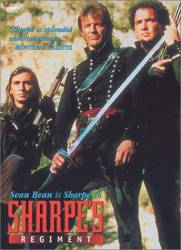
Factual error: Following their re-equipping at the South Essex depot, Sharpe marches his battalion across the bridge towards London. However, every non-commissioned officer is aware that troops don't march across a bridge. They break step to avoid setting up harmonics that would collapse the structure.
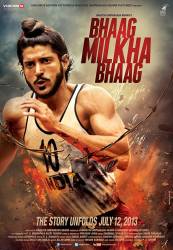
Factual error: The bikes used in film are Enfield Classics, which were introduced in 2010 and not available in 1960 or 1947. The engines are visible in 2 scenes (when young Milka meets his sister for first time in Delhi and when Milka rides to see his old home when in Pakistan) and are AVL engines, not the cast iron engines in 1950s bikes.
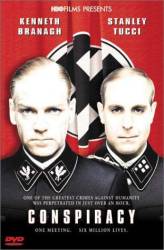
Factual error: All SS members have right collar tabs, except Heinrich Müller. His rank at that time was SS-Gruppenführer, same as Otto Hofmann, but his collar tab corresponds to SS-Brigadeführer (one step lower). For addition, the collar tabs of some general ranks changed after April 1942. The conference took place in January 1942, so they have older versions. But as I wrote, Müller and Hofmann were at the same rank, so the tabs should look the same.
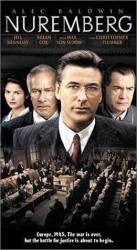
Factual error: One of the cars featured at the end of the film is an Alvis TA21, which only entered production in 1950, several years after the Nuremberg Trials.
Factual error: In various shots throughout the film "Sky TV" style satellite dishes can be seen on houses - the film is set in 1972 many years before satellite TV existed.
Factual error: In the film, the mutiny occurs during the day, when Bligh allows a crewman to die of thirst. The actual mutiny occurred in the middle of the night, when Christian and several followers entered Bligh's cabin and awakened him.
Factual error: In reality, Commodus did not die in the arena - he was strangled in his apartments in 192 A.D. by an athlete who was hired by a group of Senators conspiring against him.