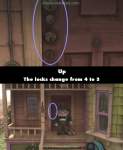
Continuity mistake: When Mr Fredrickson opens the door there are 4 locks on the front door looking from the outside in. Next scene and consequent scenes there are only 3. (00:12:35)
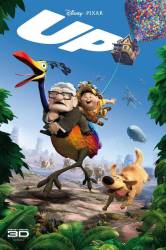
Directed by: Pete Docter, Bob Peterson
Starring: Christopher Plummer, John Ratzenberger, Edward Asner, Jordan Nagai
(8 votes)


Continuity mistake: When Mr Fredrickson opens the door there are 4 locks on the front door looking from the outside in. Next scene and consequent scenes there are only 3. (00:12:35)
Dug: My master made me this collar. He is a good and smart master and he made me this collar so that I can talk. Squirrel!.My master is good and smart.
Carl: It's not possible!
Dug: It is, because my master is smart.
Trivia: Nicknamed Pixar's lucky charm, John Ratzenberger is the only actor with parts in all of the studio's films. In Up, he voices the construction foreman who urges Carl to sell his home.
Question: How old is Charles Muntz when Carl and Russell encounter him? When Carl was a kid, Charles appeared to be an old man. But, with the rest of the movie showing Carl at the age of 78, that would make Charles well over 100. How is he still alive?
Answer: According to writer/director Pete Docter, Carl was 9 and Muntz was 23, so if Carl is 78 in the rest of the film, that would make Muntz about 92.
Sierra1 ★