Factual error: The movie shows that Charles I remained in Oxford until Oliver Cromwell himself arrested him. In reality, Charles fled to Scotland but the Covenanters sold him back to Parliament.
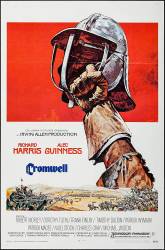
Cromwell (1970)
1 review
Directed by: Ken Hughes
Starring: Richard Harris, Alec Guinness, Robert Morley, Dorothy Tutin
Your rating
Average rating
(2 votes)
Unlike most biopics, Cromwell is actually enjoyable and fun. Nobody watches this because of the historic accuracies but because Richard Harris, Alec Guinness and young Timothy Dalton are out hamming each other.


More mistakes in Cromwell
Oliver Cromwell: Any action against any member of this House is a breach of privilege, and I move that this House declare as public enemies any who lays hands upon its members. I FURTHER MOVE! I further move that any such action against this House be considered a crime against the people and treason against this nation.
Charles I: So be it. Mister Speaker, you will inform the members of this House that their service is no longer required by the nation. This parliament is, by my authority, terminated. Dissolved.
Trivia: After the execution of Charles I / Alec Guiness, Oliver Cromwell / Richard Harris returns to his home. Sitting by the fire, he is consoled by his wife: he can now put the cares and worries of war and politics behind him, and enjoy a quiet life as a country gentleman. This cosy domesticity is rudely interrupted when some of his old colleagues arrive to tell him tell him that he is now needed to run the country. He protests that, as a country gentleman he would be unfit for such a role, but he reluctantly assumes power. In fact, by the time of Charles I's execution Oliver Cromwell was one of the most powerful political figures and military commanders in Britain, and actively continued commanding armies in Ireland, Scotland and England, and involving himself in government. Although rejecting a suggestion that he should be crowned king (after much deliberation), he was quite willing to take the title of 'Lord Protector' and govern England, Scotland, Ireland and Wales until his death in 1658.