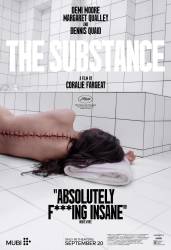
Trivia: Demi Moore only says one line to Dennis Quaid in all their scenes together throughout the entire film.
Trivia: The film contains many nods to the films of Stanley Kubrick, most obvious being the hallway at the studio, which looks very much like one of the hallways from the Overlook Hotel in "The Shining." Even the carpet is a similar pattern.
Trivia: Dennis Quaid reportedly ate about four pounds of shrimp for the scene where his character disgustingly eats shrimp in front of Elisabeth while ranting at her.
Trivia: Ray Liotta was meant to play the creepy producer Harvey, but tragically passed away shortly before production began.
Trivia: Whenever we see Sue nude (which is quite often), her breasts are actually completely fake. Director Coralie Fargeat wanted Sue's figure to be very exaggerated and almost cartoonish, likening her body to Jessica Rabbit from "Who Framed Roger Rabbit." Actress Margaret Qualley thus had to wear prosthetics to enhance her figure, including a fake set of hyper-realistic large breasts. Qualley joked that the effects teams gave her "the rack of a lifetime... just not my lifetime."


Answer: There's a false belief that an Oscar winner automatically becomes a megastar, raking in millions and getting many movie offers. That's true for some, particularly established actors, but many find that their careers did not significantly improve and even diminished. Unfortunately, Oscar awards can be less about acting ability and more about Hollywood political wrangling, a popularity choice, a PC vote, personal bias, or a sympathy win. Some believe in an "Oscar Curse," where winning actually hurts an actor's career.
raywest ★