Question: Who did the demonic voice that told the priest blessing the house to get out?
Answer: George Lutz.
How was it accomplished?

Question: When Frank is delivering books to inmates' cells, he reaches D block, but a guard stops him, and tells him they are not allowed in those cells. Were books really disallowed in D block cells?
Answer: Those were the solitary confinement cells, with no light and no luxuries of any kind. So yes, they did not allow inmates on that block to have books.
This is inaccurate as a light in each cell was turned on at 6:30 every morning in solitary confinement at Alcatraz.
Question: Why would the Riffs instantly believe that The Warriors did it? Wouldn't it have made sense, especially with the sheer numbers of The Riffs, that they search Cleon and anyone still there who they can get hold of?
Answer: The Riffs were informed of the Warriors' innocence of wrongdoing by a member of another gang who had no reason to lie on behalf of the Warriors or to frame Luther (the actual culprit). Apparently Luther had a reputation for dishonesty, among other things, whereas the Warriors were considered to be among the city's more "honorable" gangs.
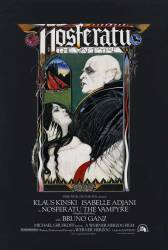
Question: According to Werner Herzog, the rats that appear in the film behaved better than Klaus Kinski during the shoot. Is this true?
Answer: True, though the rats comment was deliberate hyperbole. Kinski suffered from mental illness much of his life. He was often volatile, erratic, disruptive, and sometimes violent on movie sets. Kinski and Herzog had a long professional collaboration but also a friendship pre-dating Herzog's directing career. Otherwise, though Herzog admired Kinski's talent, he probably would never have tolerated working with him; he is the only director who worked with him more than once. Herzog did a documentary about Kinski after his death, which included footage of his on-set rants. Clips are on YouTube.
Moreover, Herzog was initially reluctant to hire Kinski in Fitzcarraldo movie because he was afraid that Kinski would go "totally bonkers" if trapped in the Amazon for any length of time, and his fears proved to be well-founded.
To correct a slight factual error in the answer: Director Alfred Vohrer worked on more movies with Kinski than Herzog did.
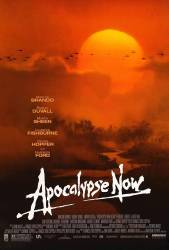
Question: Would anyone happen to know what song is playing in the background on the radio beside the intelligence officer sitting at the bar when Martin Sheen enters the Generals trailer and is being interviewed by Harrison Ford for the first time?
Answer: It's not any specific song; it's just the kind of generic piano music you'd hear at dinner at a high-class restaurant of the era. Think of scenes in movies, films, etc. set or made in the '50s and '60s, where the characters go to a nice dinner and there's someone at the piano playing unobtrusive music to accompany the food/conversation.
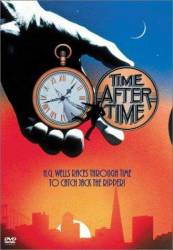
Question: Excluding plot convenience and suspension of disbelief, how could the time machine be shipped to San Francisco when H.G. Wells was traveling into the future with it?
Answer: At the end of the movie, he said that he was going to dismantle the time machine, so it's not used again, thus ending this timeline and the timeline we know as H.G. Wells would come to pass. As for the time machine being in San Francisco, if the machine had never been moved or buried, he would have landed in London.
Answer: In the late 1970s, Wells' time machine and other belongings were sent to San Francisco as part of an H.G. Wells exhibit at a museum. It had been found two years earlier, buried under Wells' since-demolished London house. It was considered a non-working "curiosity" that Wells built and had inspired his novel, "The Time Machine." In the 19th century, when Wells chased Jack the Ripper into the future, that is where his time machine landed, apparently drawn to its 1979 counterpart in San Francisco. At the end, Wells returned to 19th-century London in the time machine, where it would eventually be found many decades later. And sorry, but there has to be some "suspension of disbelief" to explain the time travel.
Answer: Yes.
Tobin OReilly