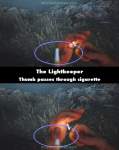
Factual error: In the 1918 WW1 flashback in France, Wooden desk organizer with folders labeled "Most Secret," "The King," "The PM," "Air Ministry," etc., and a hand-drawn map. British headquarters did label correspondence by recipient ("War Office," "PM," etc.), but not usually with printed tags on pigeonholes marked Most Secret; that phrasing came into official use after WWI (interwar period onward). "Air Ministry" existed from January 1918, so its inclusion is technically correct. The typeface and office furniture again feel WWII-era, not Great War.

Factual error: In the WW1 1918 flashback, radio equipment is shown that is majorly anachronistic. Reel-to-reel tape recorders didn't exist until the late 1930s (German Magnetophon). The radio equipment again resembles WWII sets like the British Wireless Set No. 19 or U.S. BC-312—decades newer than 1918 spark-gap transmitters or Marconi S.F. transceivers. Small indicator lamps and enclosed metal chassis also point to WWII/Cold-War tech.

Factual error: In the WW1 flashback in 1918, Arthur is using a near-modern telescope. The optical instrument looks like a mid-20th-century naval or coastal-observation scope, painted metal with modern fittings. WWI field telescopes were brass or blackened steel.
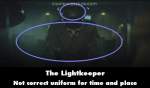
Factual error: In the WW1 1918 Amiens battle flashback, an officer is shown leaning over a table. The anchor insignia implies Royal Navy or merchant-marine affiliation, not British Army. The Battle of Amiens was a ground offensive under the British Fourth Army. Uniform colour and cut (jacket seams, shoulder boards) look WWII-era naval or coastal-command, not WWI British Navy blue tunic or khaki service dress.
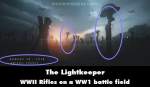
Factual error: In the WW1 France flashback of 1918, the rifles used for grave markers are inaccurate. The rifles appear to have post-WWI furniture, straight bolt handles and narrow receivers resembling Mauser 98s rather than the British SMLE Mk III (which had a protruding magazine and rounded bolt knob).
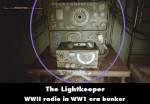
Factual error: In the WW1 British bunker flashback, a radio is part of the puzzle. This radio design is WW2 to early Cold War era (1930s-1950s). WW1 wireless sets were far bulkier, usually spark-gap transmitters or early valve sets, with open wiring and large coils, not compact boxes like this. The connectors and dials are consistent with WW2 British WS No. 19 or similar.
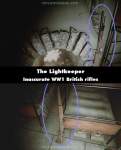
Factual error: In the British WW1 bunker flashback, the rifles look similar to a Carcano M91 or Mannlicher-Carcano variant, based on the thin barrel and bayonet lug shape. The British Army used the Lee-Enfield SMLE Mk III, recognizable by its protruding magazine and thicker fore-end wood. The straight bolt handle and en-bloc clip cutout visible in the receiver area suggest Carcano or similar continental rifle, not British. The Lee-Enfield SMLE had a curved bolt handle and detachable 10-round magazine.

Factual error: The WW1 flashback in the bunker shows a fireplace carved out of stone and brick in the wall. Fireplaces like this, with heavy-cut stone arches, were more typical of civilian or 19th-century farmhouses, not military dugouts or British bunkers of WW1. Frontline dugouts used makeshift tin stoves or field ovens, not full fireplaces.