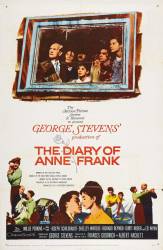
Question: Why does the play start with The Van Daans already at the Annex when it's clear that they arrive a week later in the diary?
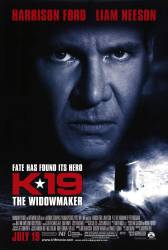
Question: Why attempt Russian accents in a film that is purely Russian? The star, Harrison Ford, doesn't even pretend to be Russian. Why should anyone else?
Answer: Harrison Ford does attempt a Russian accent in this film. It's a very slight, very bad attempt but he's definitely trying. Audiences come to expect accents in films such as these for a heightened sense of immersion. Hearing American accents from supposedly Russian characters can sometimes be jarring to an audience, even if the characters are speaking English. This of course isn't always the case and plenty of films have actors speaking in their natural accents while they are playing foreign characters. The director of this film chose to have his actors speak with Russian accents, with extremely poor results pretty much all around.
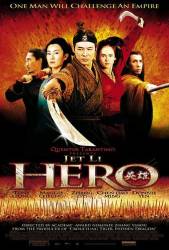
Question: Was this film based on an true story, or was it fiction based on the true warring states as the backdrop?
Answer: It was a fiction based on the true historical period as backdrop, althought it sorted of resembled a true event that the deserter general of Qin gave his head to an assassin as a pass to get close to the Emperor, who was then still a king of a state among the warring states.
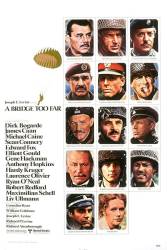
Question: In the scene where the American 82nd Airborne is storming the river bank at Nijmegen, there is a brief shot of one of the German defenders, who looks quite startingly like a puberescent boy. Anyone know whether this assumption is correct, and if so, what's the background to this story?
Chosen answer: The Germans did use some Hitler youth movement in the war.

Question: Was Josh Chamberlain really given mutineers like in the movie?
Answer: Yes. After the 2nd Maine Infantry was disbanded, there were 120 men with 1-year of service left. They mutinied because they said they only agreed to fight under the 2nd Maine flag and the Army disagreed. So they were marched under guard to the 20th Maine, led by Chamberlain. Chamberlain was able to convince most of them to fight, even though he was ordered to shoot any who did not fight.
Is there a reason why a few of them refused to fight?
Yes. The same reason why they mutinied.
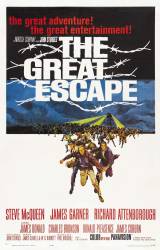
Question: How come Hilts could not answer the German at the end of the movie when he said he could speak German to Colonel von Luger?
Answer: .And, just to add to the previous answer: even if he could speak conversational German, he would likely do so with a very strong American accent (as he does when he speaks the few words to the Commandant earlier), so the guard would have picked up on that right away, anyway.
Answer: He could have only known a small amount of German, enough to answer a question or two, but not enough to carry on a full conversation. Also, the German seemed to be wanting to have a full conversation with him. He was on the run and didn't have time to talk. He was most likely being a smart ass saying he knew German.
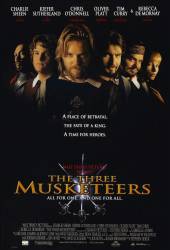
Question: If Countess de Winter's fleur-de-lis brand is on her left shoulder, how did she manage to keep it hidden from Athos during their entire marriage? Were they never intimate?
Chosen answer: They were most likely intimate, but until modern times, it was typical for men and woman to always maintain their modesty by never being completely nude in front of someone, even their spouse. The Countess was probably always partially clothed whenever they were intimate. Marital relations were usually confined to the bedroom, in the dark, and after retiring for the night. Aristocratic women also dressed privately, assisted by a lady's maid. At one time, people even bathed while partially clothed. The Countess may also have used some cosmetic treatment to help cover the brand.
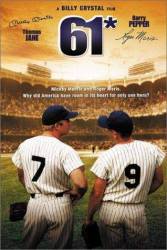
Question: Mickey Mantle was on a home run streak that year and then got hurt. I am just curious to know, if Mickey Mantle had been the one to break the record, if there would be such an uproar over it.
Answer: Actually Maris was MVP the previous year, 1960.
Answer: Probably not. Mantle was loved by the fans and the sports writers, plus he was a good layer. Maris never really had a good season before, or after, so a lot of people did not think he deserved to be the one to break the record.
Question: Would a sergeant-major participate in a mission?
Answer: This one did, everything ascribed to him in the film was true.
CSM Plumley's records show that he served in 320th Glider Field Artillery Battalion as a scout. The 320th participated in two glider assaults in the European Theater. Also, Plumley never served in Korea during the Korean War, so he couldn't have participated in one of the two combat jumps of that conflict. His record book indicates he was at Ft. Campbell, Kentucky (1951 to early 1953) when he received orders to Germany. Finally, he never claimed to have made any combat jumps in his career.

Question: When Eduardo discovers the dilution of his percentage, he asks Mark if he did it because of the "article about the chicken", which accused Eduardo of forced animal cannibalism. Sean Parker hears this and says, "What's he talking about?" and then says "Seriously, what's the chicken?" Is this implying he was the one who gave the chicken story to Mark's lawyer so he could use it in the previous scene where he mentions it?
Answer: No, earlier when it came up in the lawyers office, Eduardo thought it came from Mark, but the lawyer stepped in and said they were able to find it themselves. Sean really had no idea what he was talking about, but didn't use it against him.
Question: What is the hospitaler inserting into his mouth as he squats near the creek?
Answer: I thought it was cotton with oil of clove for a bad tooth.
Answer: The answer is a "miswak," a dental hygiene twig used, and still used, for cleaning the teeth.

Question: When the jug was hit, how did the bullet not hit the horse behind it?
Answer: In reality, the bullet probably would have hit the horse, injuring it. Movies tend to gloss over details like that to serve and simplify the plot. Older movies particularly fudged reality, assuming audiences would not notice or care. It is also possible that the bullet was somehow deflected or broke up upon impact.

Question: Why wasn't it acceptable for Marie to breastfeed her daughter?
Answer: It was typical for royalty and the aristocracy to remain extremely "hands off" regarding child rearing. Nannies, wet nurses, and tutors tended to all their offsprings' needs, and parents usually spent relatively little time with their children. It would be considered extremely odd for a queen to engage in something so personal and common as breastfeeding her child.
Question: Why is Jimeno so out of breath and tired-looking when near the cart at the beginning?
Answer: That cart was very, very heavy.
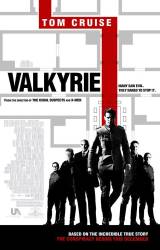
Question: Why did all of the officers and high-ranking officials put out their cigarettes when Hitler's plane landed at the airfield?
Answer: Hitler was fanatically anti-tobacco: https://www.theatlantic.com/health/archive/2014/07/the-nazis-forgotten-anti-smoking-campaign/373766/.
Answer: They are supposed to stand at attention when he arrives and salute when he walks past them. It is considered bad form to salute the Führer (or any leader) with a cigarette in your mouth or hand.
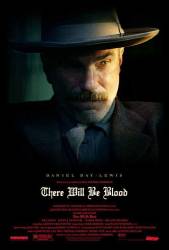
Question: What kind of accent does Daniel Day-Lewis speak with?
Chosen answer: Daniel Day-Lewis based his voice for and characterization of Daniel Plainview in part on old recordings of the director, writer, and actor John Huston. An article by Christopher Goodwin in the Sunday Times (of London) revealed Paul Thomas Anderson sent Day-Lewis documentaries about Huston while Day-Lewis was preparing to play the role.
Just watched it. Sounds exactly like Huston in Chinatown.

Question: When the Duke says that he "cannot" ask Lady Bess to leave his home (after the Duchess discovers their affair), does he simply not want to or is there some reason that he feels he cannot?
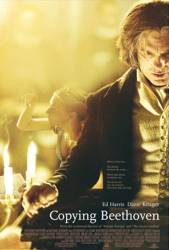
Question: Why was Beethoven depicted as an obnoxious, rude and unlikable man in this movie? I read that in the real life he wasn't such a bad person.
Answer: It's a fictional version of Beethoven. Artistic license is used to enhance the drama by embellishing Beethoven's personality, likely to show his anger, frustration, and despondency over becoming deaf. Like many similar biographical movies, it is not meant to be an accurate portrait.
Answer: Movies do not always exactly follow the books they are adapted from. Oftentimes scenes and/or characters are changed, deleted, or streamlined, often because there is a limited amount of time in a movie to tell the story. In this case, it just simplified the plot by having the Van Daans already at the Annex, eliminating the need for two separate arrivals and instead focusing on the Frank family's reactions to their situation.
raywest ★